
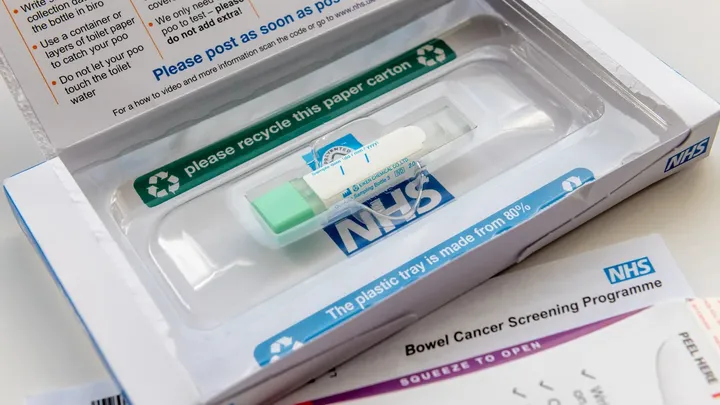
A small envelope arrives in the mail, containing a test most people would rather not think about. It ends up in a drawer, on a kitchen counter, or straight in the trash. Yet the test inside could help detect bowel cancer before any symptoms appear.
In the Netherlands, the problem has become so widespread that November 3, 2026, marked the first national Day of the Purple Envelope. According to Rijnmond, more than half of people in major Dutch cities don't participate when first invited for bowel cancer screening.
The issue isn't limited to the Netherlands. Millions of people in the UK and US are also eligible for home screening. So what does the test actually involve, and why is it worth doing?
What is the bowel cancer home test?
The test is known as a fecal immunochemical test (FIT). It checks a small stool sample for traces of blood that cannot necessarily be seen with the naked eye.
Blood can sometimes indicate polyps, which are growths inside the bowel, or bowel cancer. However, blood in the stool doesn't automatically mean cancer is present.
The purpose of screening is to identify possible problems before symptoms develop.
In the Netherlands, people aged 55 to 75 receive an invitation every two years. A letter arrives first, followed around three weeks later by a purple envelope containing the free test.
This year, Dutch health organizations introduced a new biodegradable collection paper to make collecting a sample easier and more hygienic.
Who should get screened in the US, UK and Netherlands?
The recommended ages and screening schedules depend on where you live.
United States: The CDC recommends screening for most adults aged 45 to 75. Options include an annual FIT test or a colonoscopy, usually every ten years for people at average risk. Ask your healthcare provider which option is appropriate.
United Kingdom: The NHS offers a free FIT kit every two years to eligible people aged 50 to 74. In England, people aged 75 and over can request a kit by calling 0800 707 6060.
Netherlands: The national programme invites people aged 55 to 75 every two years. Participation is free and voluntary.
Belgium: In Flanders, eligible adults aged 50 to 74 also receive a free stool screening kit every two years.
How to use the test at home
Although instructions vary slightly by country and manufacturer, most FIT kits involve the same basic process.
- Use the supplied collection paper or a clean container to catch your stool, keeping it away from toilet water.
- Open the sample tube and remove the small collection stick attached to its cap.
- Touch or scrape the grooved tip against your stool, following your kit's instructions. Only a tiny amount is needed.
- Return the stick to the tube and close it securely.
- Place the tube in the supplied packaging and return it as instructed.
For the Dutch screening kit specifically, the RIVM recommends taking the sample on Sunday, Monday, Tuesday, or Wednesday and mailing it the same day. Before use, the kit should be stored between 2°C and 30°C (36°F to 86°F).
These timing and temperature rules are not universal. Always follow the instructions supplied with your own test.
What if you've thrown away your kit?
Don't assume you've missed your opportunity.
In England, call the NHS bowel screening helpline on 0800 707 6060. In the US, contact your healthcare provider about obtaining a replacement FIT kit.
In the Netherlands, you can request another invitation or test through Mijn Bevolkingsonderzoek or contact its customer service.
Results generally arrive within approximately two weeks in the Dutch and NHS programmes.
An abnormal result doesn't necessarily mean cancer, but further investigation, often a colonoscopy, may be needed.
Most importantly, screening is intended for people without symptoms. If you notice blood in your stool, persistent changes in bowel habits, unexplained weight loss or ongoing abdominal discomfort, contact your doctor rather than waiting for a screening invitation.