
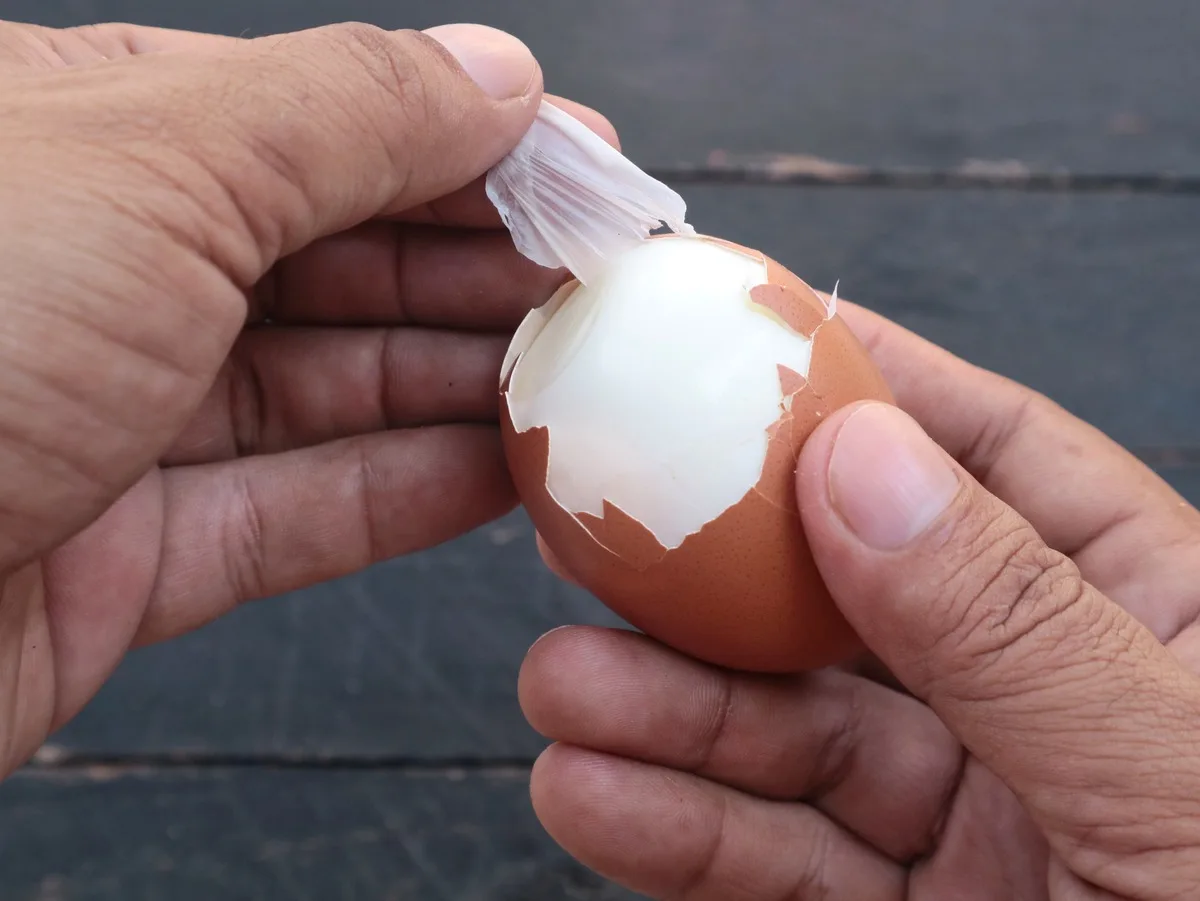
It’s one of those small kitchen mysteries: two eggs from the same pan, one slips out of its shell in seconds, while the other surrenders its white in chunks until you're left with a cratered mess. The difference is usually not your technique but can come down to the age of the egg.
Very fresh egg whites have a lower pH, and when they cook, they can cling tightly to the membrane just inside the shell. As the egg sits, its chemistry changes and that bond becomes weaker. Research has linked easier peeling to an egg-white pH of roughly 8.7 to 8.9.
So, oddly enough, the freshest eggs aren't necessarily the best eggs for boiling.
Why fresh eggs stick to the shell
Fresh eggs are simply harder to peel because the egg white sticks more tightly to the membrane inside the shell.
As an egg sits in the refrigerator, carbon dioxide slowly escapes through the tiny pores in the shell. That changes the egg white and weakens its grip on the membrane, making the shell easier to remove.
Older eggs also develop a larger air pocket at the wider end. That gives you a little more room to get your fingers under the shell when you start peeling. So when an older egg peels more cleanly, it's not because it's fresher or better. It's simply had more time to change in ways that make peeling easier.
The 10-day rule for easier peeling
If you want eggs that are easier to peel, don't use the freshest eggs in the carton. A good rule of thumb is to use eggs that have been refrigerated for about 7 to 10 days.
There's one small trade-off. As an egg ages, the white becomes thinner, so the yolk can move around more easily. If you're making deviled eggs and want the yolks perfectly centered, extremely old eggs aren't ideal.
And this rule is about peeling, not food safety. Keep your eggs refrigerated as usual. Once you've cooked them, the U.S Department of Agriculture or USDA recommends refrigerating hard-cooked eggs within two hours and using them within one week.
What if you don’t want to wait?
You don't have to give up on a fresh batch or keep them aside and wait. A few tricks can help.
Try a hot start. Instead of heating the eggs and water together from cold, carefully lower the eggs into already-simmering water. Starting the eggs in hot water can help the white set more quickly and may make the membrane easier to separate from the cooked egg. Food scientist Polly Burey discusses the effect of cooking temperature and starting conditions in The Conversation's explanation of egg peeling.
Cool them quickly. Once the eggs are cooked, transfer them straight into ice water and let them cool thoroughly. The rapid cooling can cause the cooked white to contract slightly and firm up, which can help separate it from the shell. The same food-science explanation recommends cooling cooked eggs in ice water to make peeling easier.
Baking soda is worth trying — but don't expect miracles. Harold McGee has suggested adding about ½ teaspoon of baking soda to a quart of cooking water because making the water more alkaline may help reproduce some of the chemical conditions of an older egg. The Kitchn cites McGee's explanation and the baking-soda method.
There is a catch, though. When The Kitchn actually tested the baking-soda trick, the results were mixed. In their tests, baking soda did not produce a consistent, noticeable improvement.
So it's a trick you can try when you're stuck with very fresh eggs, but it isn't a guaranteed fix.
What about salt or vinegar?
You'll find plenty of advice telling you to add salt or vinegar to the cooking water, but the results are less convincing.
Salt has produced mixed results in testing, while alkaline or acidic additions have some theoretical basis for affecting how the egg separates from its shell. But that doesn't mean every popular kitchen hack works reliably.
The more consistent lesson is much simpler: egg age matters.
Starting with eggs that aren't extremely fresh, then cooling them quickly after cooking, gives you a better chance of getting that clean peel.
So if your next boiled egg comes out looking like someone took a bite out of it, don't automatically blame your technique. The shell may simply have had a very good grip on a very fresh egg.