
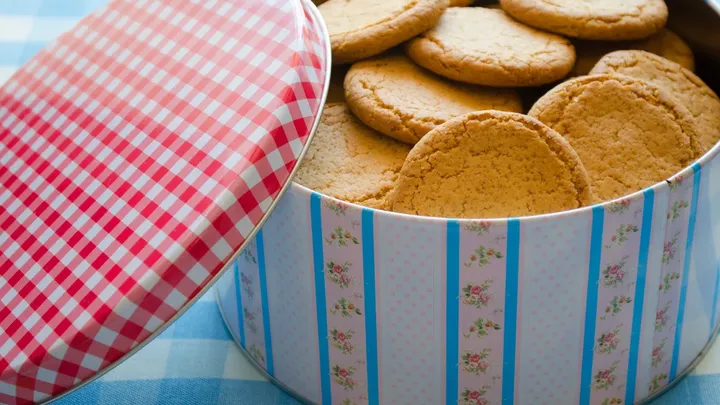
Christmas baking often leaves the kitchen full of treats. Gingerbread cookies, buttery shortbread, chocolate chip cookies, and crunchy gingersnaps all need somewhere to go. Most people simply put everything into one large cookie tin.
But according to baking experts, that familiar habit could be ruining your homemade cookies.
And there's another traditional kitchen trick that can make the problem worse: putting a slice of bread in the cookie tin.
Why you shouldn't store different cookies together
According to American baking company King Arthur Baking, cookies with different textures should be stored separately.
The company gives a simple example. If you put a soft peanut butter cookie alongside a crunchy gingersnap, moisture moves between them. The gingersnap becomes softer, while the peanut butter cookie loses some of its tenderness.
This happens because moisture naturally moves from foods with higher moisture availability toward drier foods.
The Norwegian homeware company Vokshus identifies mixing different types of Christmas cookies as a common storage mistake.
Fortunately, the solution is straightforward. Keep crunchy cookies, such as shortbread and gingersnaps, in one airtight container. Store softer varieties, including chewy chocolate chip cookies and soft gingerbread, in another.
If you're preparing a Christmas cookie platter for visitors, combine everything just before serving.
Grandma's slice of bread trick: when does it work?
You might remember your grandmother putting a slice of white bread inside a cookie tin. It's an old household trick, and there's a scientific explanation for why it works. King Arthur Baking explains that fresh white bread contains plenty of moisture. Inside a sealed container, it creates a humid environment that helps soft cookies retain their tenderness.
But here's the important detail: this trick is only suitable for cookies you want to keep soft. Put that same bread alongside crunchy shortbread or gingersnaps, and those cookies can absorb the moisture and become limp.
The same principle applies to another traditional trick: adding a piece of apple. According to Yumsto, apple releases moisture that can help soften firm gingerbread. However, it can spoil the texture of crunchy cookies. Apple can also develop mold if forgotten. Replace the bread or apple every couple of days, check it regularly, and remove it once the cookies have softened.
Let cookies cool completely before putting them away
Another common mistake happens before the cookie tin is even closed.
Freshly baked cookies may look ready to store, but if they're still warm, they release steam. Once trapped inside a container, that moisture can cause condensation. The result? Cookies that were beautifully crunchy when they left the oven can become disappointingly chewy.
Allow cookies to cool completely on a wire rack before storing them. Choose airtight tins or glass containers and keep them somewhere cool and dry, away from direct sunlight.
The refrigerator isn't usually the answer, either. King Arthur Baking warns that refrigeration can dry out ordinary cookies. For crisp varieties, condensation can also be a problem. An important exception is cookies containing perishable fillings, such as whipped cream or cream cheese. These need refrigeration.
Already gone soft? Try this oven trick
If your once-crunchy cookies have already softened, don't throw them away immediately.
American packaging company Avco Boxes recommends spreading softened crisp cookies on a baking sheet and warming them in the oven at approximately 300°F (150°C) for three to five minutes.
Let them cool completely on a wire rack afterward. As they cool, some of their original crispness may return.
This works best for plain, crunchy cookies. Avoid using the method on cookies with delicate icing, cream fillings, or decorations that could melt.
If your soft cookies have become hard, try the opposite approach: place them in an airtight container with a slice of fresh bread overnight.
How long homemade cookies stay fresh depends on their ingredients and recipe. Some are best eaten within a few days, while others can retain their quality for a week or two, or longer.
The easiest rule to remember this Christmas is simple: keep crunchy cookies with crunchy cookies, soft cookies with soft cookies, and save the mixed assortment for the serving plate.