
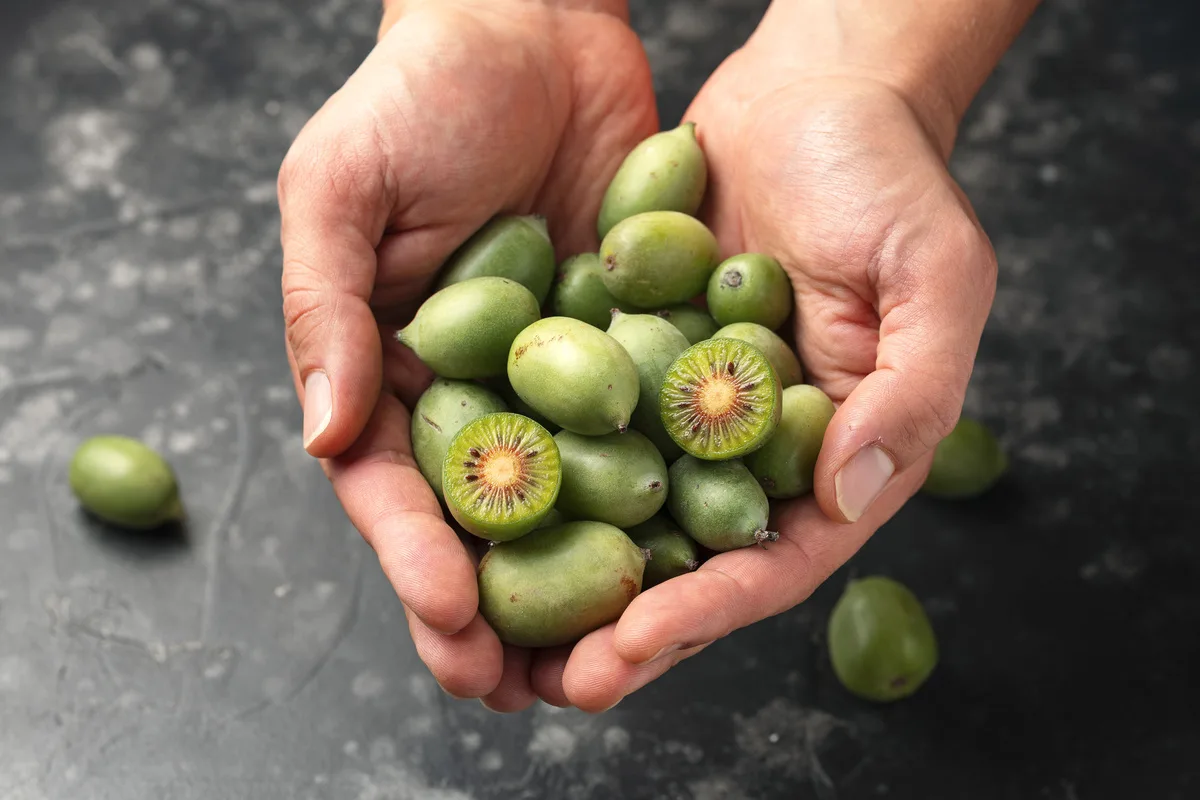
They look like green grapes and taste like kiwi, only sweeter. For a few weeks each autumn, kiwiberries turn up in supermarkets and at market stalls. The kiwiberry is a relative of the familiar kiwi, about the size of a grape, with a smooth, hairless skin you eat along with the rest.
The plant comes from northern Asia and, unlike its bigger cousin, is winter-hardy. It is now grown in Flanders, on a small scale in the Netherlands, and in parts of the US such as Oregon. The local season is short. Belgian growers pick from mid-August to about October, and a firm berry bought on Monday can be past its best by Friday. How long they last depends mostly on how you store them.
What exactly is a kiwiberry?
Scientifically known as Actinidia arguta, the kiwiberry is sometimes called a mini kiwi, baby kiwi, or hardy kiwi. Cut one open, and you'll find the same bright green flesh and tiny black seeds as an ordinary kiwi, but without the fuzzy exterior.
The fruit grows on vigorous climbing vines that tolerate cold winters. Flemish farmers have been cultivating it for more than a decade, while growers in Oregon harvest theirs mainly in September and October. Unlike regular kiwis, which are available throughout the year, locally grown kiwiberries have a much shorter season.
Are kiwiberries as healthy as regular kiwis?
Kiwiberries are sweet, juicy, and slightly tangy, although generally less acidic-tasting than green kiwis. Their soft skin means you can enjoy the whole fruit without reaching for a knife or spoon.
They're also a source of vitamin C and dietary fiber. 100 grams of kiwiberries contain approximately 79 mg of vitamin C and 2.3 grams of fiber. Actual amounts vary between varieties and growing conditions.
Even if the EU's specific bowel-function claim applies to the Hayward green kiwi, and not kiwiberries, eating kiwiberries has its own health benefits.
How can you tell when they're ripe?
This is where kiwiberries can be surprisingly tricky. Unlike grapes, which should generally feel firm, ripe kiwiberries should give slightly when you press them gently between your fingers.
If they're hard, leave them to ripen. If they're extremely soft, leaking juice or splitting around the stem, they've probably gone too far.
Kiwiberries don't all ripen at once. Check your hoard regularly and eat the softest ones first.
Eat them whole or try these simple ideas
The easiest way to enjoy kiwiberries is to rinse them under running water and eat them whole, skin included.
They're delicious halved over yogurt, stirred into oatmeal, or added to a fruit salad. You can also use them in an apple crumble, bake them into a clafoutis, or turn an abundant harvest into jam.
Their small size makes them convenient for lunchboxes, too. For babies and young children, however, cut them lengthwise into quarters, just as you would grapes, to reduce the risk of choking.
One important precaution: if you're allergic to ordinary kiwi, don't assume kiwiberries are safe. Research has identified potential allergic cross-reactions between the two fruits. Ask your allergy specialist before trying them.
The storage trick that keeps them from going soft too quickly
If you've bought firm kiwiberries and want to eat them over several days, put them straight into the refrigerator. Under suitable conditions, mature fruit picked while still firm will keep for several weeks.
Want them ready sooner? Leave a few at room temperature near an apple or banana. Both release ethylene gas, which accelerates ripening. Check them daily rather than forgetting about them in the fruit bowl.
Once they're soft enough to eat, refrigerate them and enjoy them promptly. Keep them separate from apples and bananas if you want to slow ripening. You can also freeze surplus berries and eat them partially thawed.