
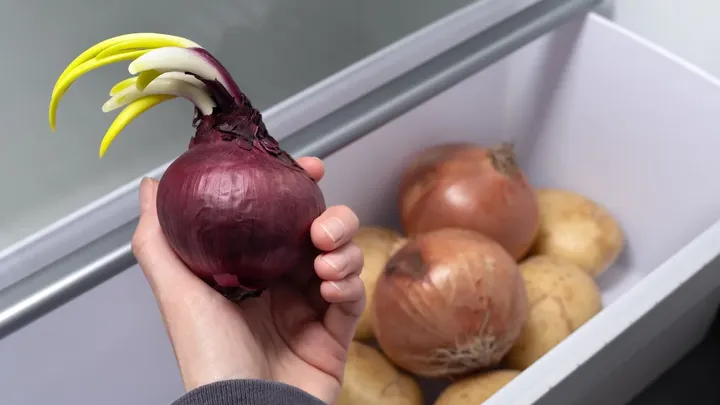
A net of onions is cheap, but it's frustrating when the last few turn soft, develop mould or start growing green shoots before you get around to using them. Often, the problem isn't the onions themselves, but where you keep them.
The good news is that a small change to your storage routine can help your onions stay fresh for much longer. But are you keeping yours in the right place?
Where onions keep best
Whole, dry onions need a cool, dark and well-ventilated place. A pantry, cupboard or dry utility room can work well, as long as it doesn't get too warm or damp.
The National Onion Association recommends keeping onions somewhere with plenty of airflow. That means avoiding sealed plastic bags, where moisture can build up and air cannot circulate properly.
A mesh bag, wire basket or open container is a better choice. Keep the papery outer skin intact, too, as it helps protect the onion.
Under suitable storage conditions, Michigan State University Extension says properly cured dry onions can last anywhere from one to eight months. How long yours last depends on the variety and the conditions in your home.
Why you shouldn't store onions next to potatoes
If you keep your onions and potatoes together in the same basket, it may be time to find them separate homes.
It seems convenient, especially if both vegetables are stored in the pantry. However, the Dutch Nutrition Centre, Voedingscentrum, advises keeping onions away from potatoes because moisture can contribute to both spoiling sooner.
The National Onion Association also recommends storing them separately.
This doesn't mean you need a complicated storage system. Simply put your onions in one well-ventilated spot and your potatoes somewhere else. It's an easy change that may help prevent you from having to throw either away before you've used them.
It's also worth keeping onions away from garlic if possible, as onions can absorb flavours from nearby foods.
Should you keep onions in the fridge?
For whole, unpeeled dry onions, the fridge usually isn't the best option. The Voedingscentrum recommends storing them outside the fridge in a dark, dry place. A damp environment can make it harder to keep them in good condition.
Cut onions are a different story. Once you've used half an onion, wrap the leftover piece or place it in a sealed container and put it in the fridge. The Voedingscentrum advises using it within about a week.
Spring onions also need different treatment from ordinary dry onions. These are best kept in the fridge.
How to tell when an onion has gone bad
Check your onions now and then, particularly if you've bought a large bag. A healthy onion should feel firm and dry. Soft spots, rotten areas or visible grey or black mould are signs that it may have spoiled.
A few loose layers of papery skin are perfectly normal, so there's no need to throw an onion away just because its outer layer looks a little untidy.
The main thing to remember is simple: keep whole onions dry, give them room to breathe and store them separately from potatoes. With the right conditions, you may get far more use out of every net you buy.