
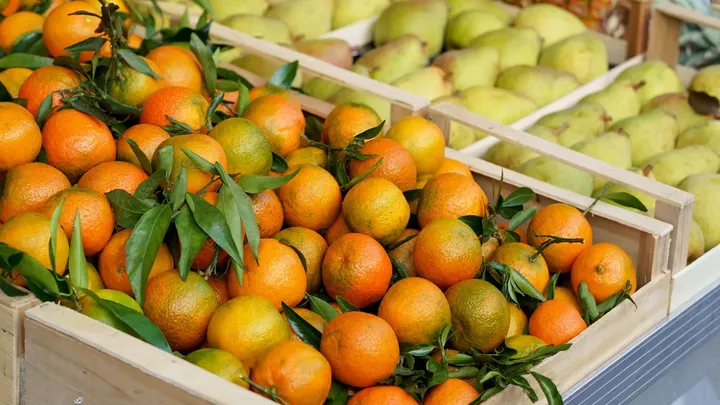
The first big bags of clementines are appearing in supermarkets, and some contain fruit with green patches near the stem. Many shoppers assume this means the fruit was picked too early, reaching instead for the brightest orange clementines they can find.
But citrus growers see things differently. A clementine can be perfectly ripe, sweet and juicy while its peel is still partly green. Interestingly, those green patches may tell you more about the nighttime temperatures in a Spanish orchard than about how the fruit tastes.
Where clementines get their orange color
Like leaves, the peel of a developing clementine contains chlorophyll, the natural pigment responsible for its green color. As autumn progresses and nights become cooler, the chlorophyll gradually breaks down, allowing yellow and orange pigments called carotenoids to become more visible.
According to Citrus Industry, this process is strongly influenced by nighttime temperatures below approximately 55°F (13°C). However, the development of sugars and acids inside the fruit follows a different timetable. During a warm autumn, clementines can reach maturity before their peel changes color. In tropical regions, where temperatures remain high throughout the year, some citrus fruits even retain their green appearance when fully ripe.
Why green patches are more common early in the season
Spanish citrus grower Naranjas del Carmen explains that customers are more likely to encounter greenish clementines at the beginning of the harvest season. Early varieties can be ready to eat by October, when nighttime temperatures in Spanish growing regions may still be relatively high.
As autumn turns into winter, cooler nights encourage the natural color change. This explains why green patches are particularly common among early-season citrus fruits that haven't undergone additional color treatments. They aren't necessarily any less enjoyable than their orange counterparts.
How producers turn green clementines orange
Because shoppers tend to associate orange peel with ripeness, the citrus industry has developed a process known as degreening. After harvesting, producers can place the fruit in temperature-controlled rooms and expose it to small amounts of ethylene, a naturally occurring plant hormone.
A 2022 study published in Frontiers in Plant Science describes how ethylene treatments are routinely used to encourage color changes in citrus fruit. Commercial degreening rooms can operate at around 82–85°F (28–29°C) to accelerate chlorophyll breakdown.
The treatment primarily changes the appearance of the peel rather than improving the flavor inside. It's an established industry practice and doesn't mean the fruit is of inferior quality.
What should you look for when buying clementines?
Unlike bananas, citrus fruits do not continue ripening after harvesting. Leaving a green clementine in your fruit bowl won't make it significantly sweeter.
Instead of judging clementines solely by their color, pay attention to how they feel. When choosing your fruit, look for:
- Clementines that feel relatively heavy for their size.
- Firm fruit without excessively soft spots.
- A fresh, pleasant citrus smell.
- Peel without mold or obvious signs of decay.
Weight can be a useful indication of juiciness. A beautifully orange clementine that feels unusually light may already be drying out.
How to keep clementines fresh until Christmas
According to the Dutch Nutrition Centre (Voedingscentrum), mandarins generally keep for one to two weeks in the fruit bowl.
The organization recommends storing whole mandarins outside the refrigerator, as exposure to cold can cause small indentations and discoloration.
Keep them somewhere cool and dry, away from radiators, direct sunlight, and fruits such as apples, bananas, and pears. These fruits release ethylene, which can accelerate changes in the citrus peel and aging.
If you've already cut into a clementine, store the remainder in a sealed container in the refrigerator.
Whether you're buying mandarins for Sinterklaas on December 5 or filling Christmas stockings, shopping about a week beforehand is a reasonable option.
And the next time you spot a clementine with a green patch, don't automatically leave it behind. Its peel may simply reflect a few warm nights in the orchard.