
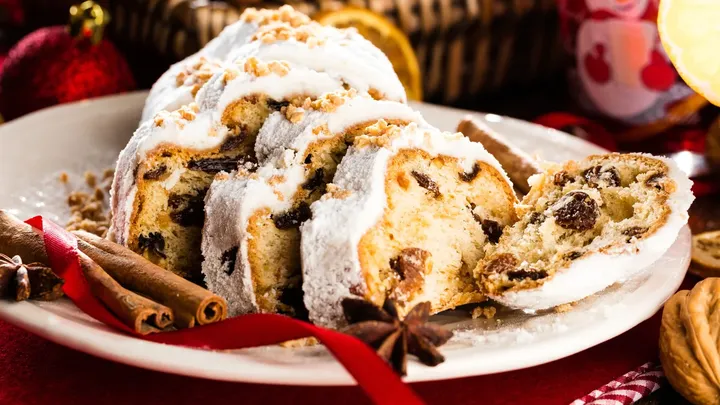
Christmas breads are already appearing in supermarkets, wrapped in foil and packed into decorative boxes weeks before the festive season begins. But if you buy one in November, will it still taste good when Christmas finally arrives?
In Germany and many other parts of Europe, preparing Christmas bread well ahead of the festive season is a familiar tradition. But one particular German speciality takes this a step further: some bakers recommend leaving it untouched for a while before serving. One german baker reportedly even keeps his in the garage, which might sound like an unusual place for something you intend to eat.
But there's a reason this Christmas bread is treated differently from an ordinary loaf. And knowing how to store it properly can make all the difference.
Why Dresden stollen is made weeks ahead
The bread is called Dresdner Stollen, a traditional German Christmas speciality made with flour, butter and dried fruit, particularly raisins. It's rich, dense and usually finished with a generous coating of icing sugar.
According to Dresden master baker Andreas Wippler, a traditional stollen benefits from resting for around two to three weeks before it's cut. During this time, the flavours have a chance to develop and come together. The combination of butter, dried fruit and sugar also helps give the loaf its characteristic texture and keeping quality.
Wippler has even discussed stollen lasting much longer, but that shouldn't be treated as a general storage recommendation. The variety matters, too: traditional butter-rich stollen tends to keep longer than versions made with quark or poppy seeds.
Where should you store stollen?
The important thing is to find somewhere cool and dry, ideally at around 12–16°C. Wippler's garage is one example, provided the temperature and humidity are suitable. A cool pantry or cellar can work just as well if conditions remain stable.
Keep an unopened stollen in its original packaging. Once you've opened it, wrap it carefully in foil or its original wrapper and place it in a food bag or suitable container to help prevent it from drying out.
The refrigerator is generally not the best place for traditional stollen. It can be too cold and damp, and the bread may dry out or absorb smells from other foods. For homemade stollen, Dr Oetker recommends allowing it to cool completely before wrapping and storing it somewhere cool. Its guidance gives a storage period of up to three weeks.
How to stop it drying out after cutting
There's another simple trick once you finally decide to serve it: cut the stollen from the middle rather than slicing off one end.
After cutting, push the two halves back together so the exposed surfaces sit against each other. This reduces the amount of bread exposed to the air and helps it stay moist. Wrap the loaf again before putting it away.
For the best flavour and texture, take it out of storage about an hour before serving so it can come closer to room temperature.
Does the same apply to Dutch kerststol?
Not necessarily. Although they look similar, German stollen and Dutch kerststol aren't quite the same. Kerststol is generally softer and breadier, usually containing raisins, currants and a centre of almond paste, known as amandelspijs.
Its shelf life depends on the ingredients and whether it's homemade or shop-bought. The Dutch Voedingscentrum, for example, gives an unopened stol with almond paste a storage guideline of two to four weeks in a kitchen cupboard. Homemade versions may keep for less time, so check the recipe or packaging rather than assuming the same rules apply.
If either bread starts to go stale, it doesn't necessarily have to go to waste. Slices can make excellent French toast, known in the Netherlands as wentelteefjes.
So, if you're buying traditional Dresden stollen early, a little patience can be part of the experience. Just make sure you give it the right conditions while it waits for Christmas.