
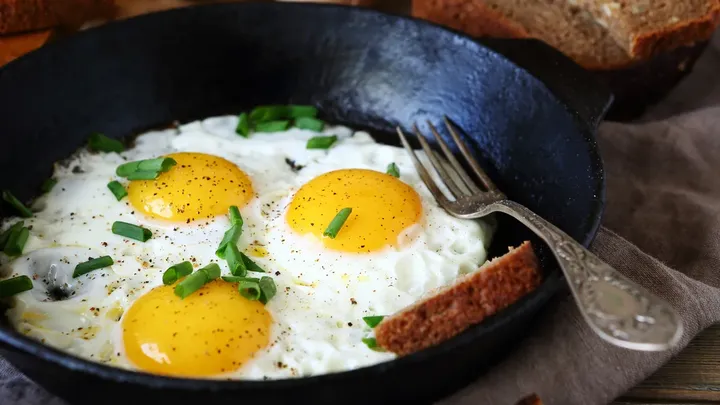
A fried egg seems simple enough: crack it into a pan, wait for the white to set, and serve it on toast. But getting those lovely golden, crispy edges without the rest of the egg turning rubbery can be trickier than it sounds.
Now, an unusual cooking trick is getting attention online. It starts with an ingredient most people already have in their fridge and requires one small change to the usual frying routine: the pan has to be cold before you begin. It sounds counterintuitive, but there's a reason behind it and another trending method takes the opposite approach entirely.
Why this unexpected ingredient works
The ingredient is mayonnaise. While it might seem an odd choice for frying an egg, its main components make it surprisingly suitable for the job.
Mayonnaise is made primarily from oil, egg yolk and an acid such as vinegar or lemon juice. The egg yolk acts as an emulsifier, helping the oil and water-based ingredients stay mixed together.
As the mayonnaise heats up, the emulsion becomes less stable and some of the oil can separate out. That oil provides the fat needed to fry the egg, while the mayonnaise's egg proteins can contribute to browning.
It's a similar principle to using mayo on fish. Food Network explains how mayonnaise can help fish develop a golden surface because its proteins brown and its fat helps retain moisture.
How to try the cold-pan egg trick
The method, shared by Japan's Asagohan Channel and reported by Archyde, depends on starting with a cold pan. Here's how to try it at home.
- Make a ring in the pan. Pipe a ring of mayonnaise onto the bottom of a cold frying pan, leaving enough room in the centre for an egg.
- Add the egg. Crack it into the middle of the ring, taking care not to break the yolk.
- Turn on the heat. Set the hob to medium-low. As the pan warms, the mayonnaise will begin to melt and release its oil, allowing the egg to cook.
- Add cheese if you like. Scatter some grated cheese around the egg white, keeping it away from the yolk.
- Cover briefly. Add about a tablespoon of water and put a lid on the pan to help the cheese melt and the top of the egg set. A few drops of soy sauce in the pan are an optional finishing touch.
The cold start is important. If the pan is already hot, the mayonnaise can melt and spread before the egg is in place, making it harder to keep the ring around the white.
The opposite trend: frying an egg with sparkling water
If mayonnaise sounds a little too unusual for breakfast, there's another method making the rounds in German media. Instead of adding oil or butter, you use sparkling mineral water.
Pour around two tablespoons of sparkling water into a hot pan and let it heat until it begins to steam. Then add the egg. As the water heats and evaporates, the steam helps cook the egg while the water reduces direct contact between the egg and the pan.
Heidelberg24 has covered this technique, noting that too much water can leave you with something closer to a poached egg.
The two methods offer different results. The mayonnaise version aims for crisp, savoury edges, while the sparkling-water method is intended to produce a softer finish. Neither is guaranteed to work perfectly with every pan or hob, so a little experimentation may be needed.
Getting the heat right
Even professional chefs disagree about the ideal temperature for a fried egg. In The Kitchn's interviews with four chefs, recommendations range from low heat to a very hot pan.
One useful piece of advice is to leave the egg undisturbed while the white sets. For the mayonnaise-ring method, starting on low heat gives the condiment time to release its oil without immediately losing its shape.
So, next time you're making eggs on toast, you could try a different approach. Whether you experiment with the mayonnaise ring or the sparkling-water method, a small change to your usual routine might give your breakfast a different texture.