
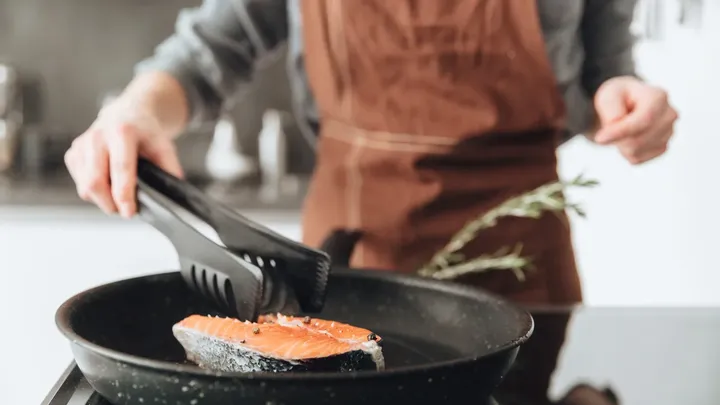
It starts with a promising sizzle and ends with a fish slice scraping at grey shreds of skin. Anyone who has fried salmon or sea bass knows the frustration of watching the best part of the fillet stay stuck to the pan. Getting that skin golden and crisp without tearing it can feel surprisingly difficult, even when you use plenty of oil.
But some cooks have found a simple way to make the job easier, and it doesn't involve buying a new frying pan or changing the type of fish you cook. The trick uses something you probably already have in your kitchen.
How the baking-paper trick works
The unusual part is that the solution involves putting baking paper directly in the frying pan. American food site The Kitchn tried the method after seeing it in a ChefSteps video and was impressed with the results.
The paper creates a barrier between the delicate fish skin and the metal pan. Baking paper resists grease, so the oil stays on its surface instead of being absorbed. The oil can still help crisp the skin, while the paper reduces the chance of the fish sticking directly to the pan.
Here's how to try it:
- Pat the fish completely dry with kitchen paper.
- Cut a square of baking paper slightly larger than the fillet, but small enough to fit safely inside the pan.
- Place it in the pan and lightly coat it with cooking oil.
- Set the heat to moderate and lay the fish skin-side down on the paper. Season just before cooking.
- Let the skin brown without repeatedly moving the fish. Once the fish is nearly cooked, turn it carefully and finish cooking the other side.
Fine Dining Lovers recommends keeping the fillet flat with a spatula to prevent the edges from curling. Cooking time depends on its thickness, so watch the fish rather than relying entirely on the clock.
Which fish work best?
This technique is particularly useful for delicate fillets that tend to break apart when you turn them. Salmon, sea bass, snapper and cod are all worth considering, especially if your non-stick pan has lost some of its coating's effectiveness.
The paper isn't a substitute for good cooking technique, however. Moisture is one of the main obstacles to crisp skin. The MICHELIN Guide highlights the importance of managing moisture and controlling the heat when cooking fish with the skin on.
Check the temperature limit first
Before trying the method, check the instructions on your baking paper. Many products are rated for oven temperatures around 220–230°C, although the exact limit varies by brand. Dutch baking site Rutger Bakt explains that paper can become brittle and catch fire at high temperatures.
An oven temperature rating does not guarantee that paper is safe against a hot frying pan. Use caution, keep the paper entirely inside the pan and never let it touch an open gas flame. Check the manufacturer's instructions before trying this method, and don't use the paper in a frying pan if its instructions don't permit it.
Finally, be patient. Whether you use baking paper or cook directly on the pan, dry fish, controlled heat and waiting for the skin to crisp before turning are the real secrets to serving a fillet that stays in one piece.