
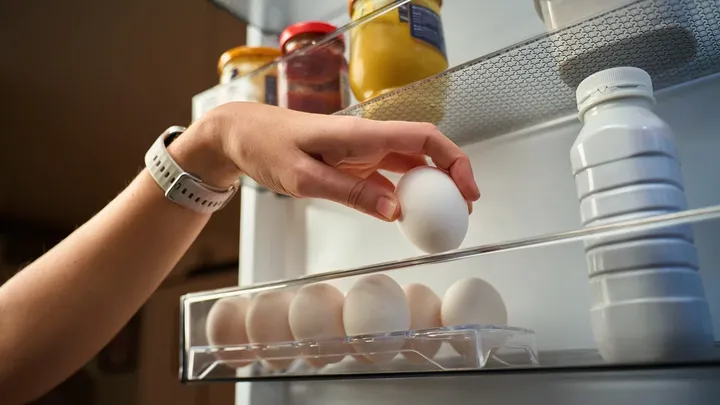
Most refrigerators come with one: a row of little hollows in the door, perfectly shaped to hold eggs. It seems like the obvious place to put them after grocery shopping.
But food safety experts recommend something different.
Interestingly, eggs aren't even refrigerated in many supermarkets. So why does their storage location matter so much once they're home?
Why the refrigerator door isn't the best place for eggs
The problem isn't the plastic egg rack itself. It's where manufacturers put it.
Every time you open the refrigerator, warm kitchen air enters. The compartments in the door experience greater temperature fluctuations than shelves inside the main compartment.
The US Department of Agriculture advises keeping eggs in their original carton in the coldest part of the refrigerator, away from the door. Dutch and Belgian food safety guidance points in the same direction.
According to FoodSafety.gov, eggs should remain in their original carton in the main refrigerator compartment, not the door.
Belgian health website Gezondheid.be offers another explanation. Temperature changes can cause condensation to form on eggshells, potentially increasing the risk of contamination with salmonella bacteria.
This doesn't mean eggs kept in the door automatically become dangerous. However, maintaining a consistently cold temperature helps preserve freshness and reduce food safety risks.
Why keeping eggs in their carton matters
Moving eggs to a shelf is only half the recommendation. Experts also suggest leaving them in their original cardboard carton.
According to the Dutch nutrition organization Voedingscentrum, eggs should be refrigerated at approximately 4°C (39°F).
The carton offers protection, too. Eggshells contain thousands of tiny pores that can allow odors from other foods to affect their flavor. Keeping eggs in their packaging helps protect them from strong-smelling foods such as onions, garlic, and fish.
There's also a small detail worth checking: the direction your eggs are facing. Eggs stay fresh longer when stored with their pointed ends facing downward. This keeps the larger air pocket at the blunt end undisturbed.
The Voedingscentrum estimates that raw eggs can be stored in the refrigerator for approximately four weeks. Check the dates on your carton rather than assuming every newly purchased egg has four weeks remaining.
Why American supermarkets refrigerate eggs, but European stores don't
If you've visited a supermarket in the Netherlands, Belgium or the UK, you may have noticed something unusual: eggs are generally displayed on ordinary shelves.
In American supermarkets, they're kept refrigerated.
The difference comes down to how eggs are processed. In the United States, commercially produced eggs are washed under controlled conditions to remove bacteria from their shells. They're then refrigerated to maintain freshness and safety. According to USDA researchers, washing and refrigeration can extend egg shelf life from approximately 21 days to as much as 15 weeks under controlled conditions.
European producers generally leave the egg's natural protective coating intact. Dutch supermarkets avoid refrigeration partly because cold eggs can develop condensation when they're transported into warmer surroundings.
Nevertheless, Dutch authorities recommend refrigerating eggs once they're home. British food safety guidance also identifies refrigeration as the ideal home-storage option.
The ten-second habit that helps eggs stay fresh
Fortunately, storing eggs properly doesn't require any special equipment.
Simply leave them in their original carton and place it on a shelf inside the main refrigerator compartment, preferably toward the back where temperatures are more consistent.
Keep the pointed ends facing downward and check that your refrigerator maintains approximately 40°F (4°C) or below.
A refrigerator thermometer can help you confirm the temperature.
And that built-in egg rack? You can leave it empty or use the door space for suitable condiments and drinks.
It's a small adjustment, but one that helps eggs stay fresh without changing how you shop or cook.