
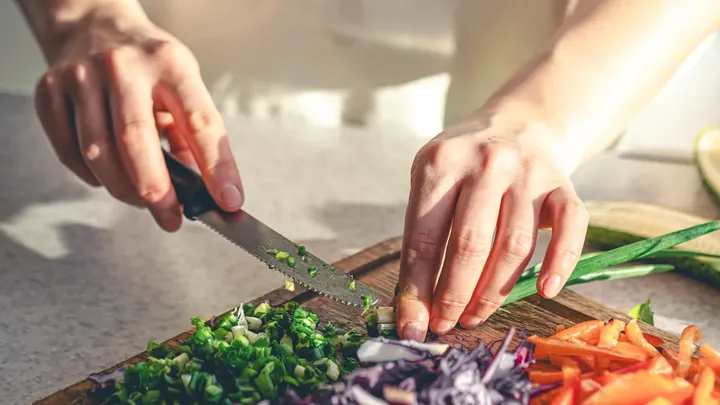
When preparing vegetables, most of us follow the same routine: cut off the leaves, peel away the skin and remove the tougher stalks before anything goes into the pan. The scraps end up in the compost or rubbish bin, and we rarely give them a second thought.
But what if some of those leftovers deserve a closer look? Researchers at King's College London recently examined parts of common fruits and vegetables that people typically discard. Their findings raise an interesting question about how much we're losing when we prepare everyday ingredients.
What did the researchers find?
The study, published in the International Journal of Food Sciences and Nutrition, examined twelve types of fresh produce. The researchers compared the fiber content of the parts people usually eat with the skins, leaves, seeds and stalks that often get thrown away.
In ten of the twelve types, the discarded parts contained more fiber than the portions normally eaten. Pineapple was a particularly striking example: its skin and core contained 453.7% more fiber than the flesh.
There was an exception, however. Broccoli stalks contained 28.4% less fiber than the florets. So, while some leftovers are worth keeping, not every discarded part is automatically the better choice.
How much are we throwing away?
The discarded parts accounted for between 24.97% and 48.18% of the total raw weight of the produce examined. In other words, almost half of some ingredients could be removed during preparation.
Project lead Dr Rachel Gibson, Reader in Nutrition and Dietetics at King's College London, pointed out that this represents a financial loss as well as a nutritional one. You're effectively throwing away a substantial portion of what you've paid for.
The figures don't mean every household wastes this much. They do show how much of certain fruits and vegetables can be discarded before cooking even begins.
Three leftovers worth keeping
You don't have to start eating every peel or stalk. A few familiar ingredients are an easy place to begin.
Cauliflower leaves: Instead of throwing them away, wash the leaves, remove damaged sections and roast them with a little oil and seasoning. You can also shred them into soup or add them to a stir-fry.
Kiwi skin: The skin is edible, although its slightly fuzzy texture isn't for everyone. If you'd like to try it, wash the fruit thoroughly and slice it thinly.
Broccoli stalks: These contained less fiber than the florets, but that doesn't make them useless. Peel away the tougher outer layer, slice the tender center and add it to soup or a stir-fry. You can also freeze the pieces for later.
A word of caution about fruit peels
Not every peel should automatically end up on your plate. The researchers note that discarded plant parts can contain higher levels of pesticide residues, among other naturally occurring substances. Their paper also discusses how washing, cooking and blanching can reduce some residues, although the effectiveness depends on the food and the substance involved.
So, wash fruit and vegetables thoroughly, and check food-safety advice before making unfamiliar peels part of your diet. Washing is useful, but it doesn't guarantee that all pesticide residues will be removed.
You don't have to use every scrap
The researchers also spoke to a focus group of 40 King's College London staff and students to understand what might encourage people to eat more of the parts normally discarded. Participants saw nutritional benefits, particularly fiber, as a stronger motivation than environmental sustainability. They also raised concerns about digestibility and felt uncomfortable eating some unfamiliar plant parts, according to the university's research announcement.
And that's understandable. There's no need to force yourself to eat something you dislike. But the next time you prepare cauliflower or broccoli, it may be worth looking at those leaves and stalks a little differently. What usually goes into the bin might still have a useful place in your next meal.