
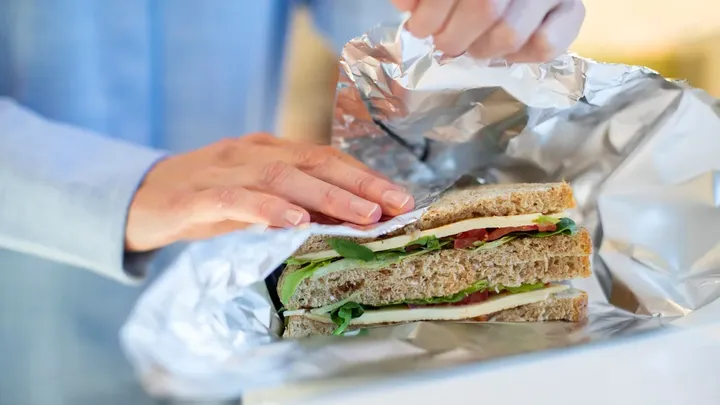
Every time you tear off a sheet of aluminium foil, there's a little decision to make. Should the shiny side face the food, or should the dull side? And does getting it wrong actually make any difference?
It's one of those kitchen questions that seems like it ought to have a simple answer. People use foil to cover oven dishes, wrap sandwiches and store leftovers, often without giving it much thought.
But there's a reason the two sides look different. And when it comes to certain foods, what touches the foil may matter much more than which way it's facing.
Why does aluminium foil have two different sides?
The answer comes down to how foil is made. According to American manufacturer Reynolds, two layers of aluminium are rolled together to make the material thin without tearing.
The side that touches the other layer becomes dull, while the side that touches the polished rollers becomes shiny.
For ordinary foil, both sides work equally well. You can put either side against your food without affecting how the foil performs.
The exception: non-stick foil
If you're using non-stick foil, the side can matter. Reynolds advises placing the dull side against the food because that's where the non-stick coating is on its product.
However, products can differ between brands. Check the instructions on your own roll rather than assuming the same rule applies to every type.
These foods are better kept away from aluminium foil
The shiny-versus-dull question is largely a myth. What matters more is how aluminium reacts with certain foods.
The Dutch Voedingscentrum explains that small amounts of aluminium can transfer into food when it comes into contact with acidic or salty ingredients.
Examples include:
- Tomatoes and tomato purée
- Rhubarb
- Fruit juices
- Salted herring
Germany's Federal Institute for Risk Assessment also advises against using aluminium foil to store or heat acidic and salty foods. Its examples include cut apples and marinated fish.
The amount of aluminium that transfers depends on the food and how it is used. Both agencies recommend choosing another material for very acidic or salty foods.
Should you stop using aluminium foil?
No. There's no need to throw away your roll.
The Voedingscentrum says aluminium intake is generally not a concern for people eating a healthy, varied diet. The body absorbs only small amounts and normally removes them through the kidneys. People with impaired kidney function may be more vulnerable to aluminium building up in the body.
For leftovers containing tomato sauce or other acidic ingredients, use a glass or food-safe plastic container instead. Ordinary foil is still useful for covering suitable dishes in the oven.
So next time you're in the kitchen, don't worry about which side of ordinary foil faces up. It's what you're wrapping that deserves more attention.