
When your usual moisturizer suddenly feels useless
Every fall, the same thing happens. The air gets colder, the heat goes on indoors, and skin that behaved perfectly well all summer suddenly feels tight and uncomfortable. Dry patches show up around the cheeks and nose. Legs start to look flaky. Even a moisturizer that worked a month ago may seem to disappear five minutes after you apply it.
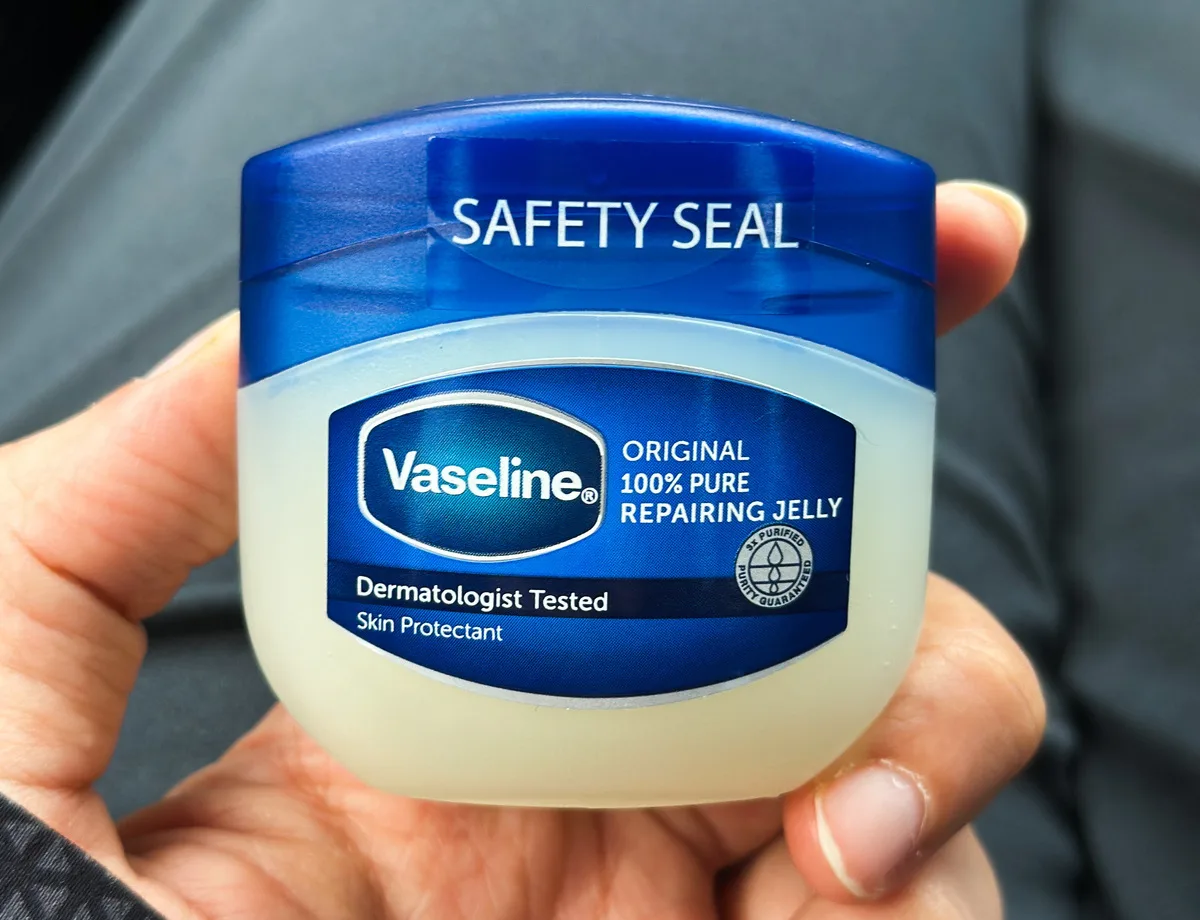
The beauty aisle has no shortage of possible fixes. There are barrier creams, overnight masks, facial oils, and serums promising intense hydration. But dermatologists also point to something much less glamorous: plain petroleum jelly. This inexpensive product that has been sitting in bathroom cabinets for generations can be surprisingly useful when skin starts losing moisture.
Petroleum jelly is especially useful when skin is losing moisture faster than usual. You can use it on a rough patch, cracked heels, dry hands, or, for some people, as the final step of a facial routine. That last method became famous online as “slugging.” It can work well, but facial slugging is only one way to use petroleum jelly, and it is not suitable for every skin type.
What petroleum jelly actually does
Petroleum jelly does not hydrate skin in the same way as a water-based lotion. Its main strength is that it forms a protective film on the skin. Studies suggest it can reduce water loss from the skin by as much as 99%, giving dry or irritated skin a greater chance of holding on to moisture.
Experts recommend applying moisturizer to damp skin after washing or bathing because it helps trap water in the skin. Petroleum jelly can be used in the same way. You can apply a thin layer directly to slightly damp skin, or place it over a moisturizer if your skin needs extra help.
The difference is useful to understand. A moisturizer can add ingredients such as humectants and emollients, while petroleum jelly mainly helps prevent moisture from escaping. That makes it particularly handy for small stubborn areas.
When facial slugging can backfire
Facial slugging simply means applying a very thin layer of petroleum jelly to the face, usually at night. For dry skin, it can reduce moisture loss and make tight or flaky areas feel more comfortable. You can use it over moisturizer, directly on slightly damp skin, or only on dry zones such as the cheeks.
Acne-prone or very oily skin needs more caution. Slugging can, at times, worsen breakouts for some people because the heavy occlusive layer may trap oil and other material against the skin. If you are prone to clogged pores, it makes sense to test a small area first or skip full-face slugging altogether.
What sits underneath the petroleum jelly matters too. Do not use slugging as an excuse to seal in every powerful product you own. One must be wary of applying petroleum jelly over ingredients such as retinoids, AHAs, or BHAs because occlusion may make them more irritating to the skin. Keep the routine boring: gentle cleansing, simple hydration if needed, then a very thin layer of petroleum jelly.
The easiest way to try it tonight
Start after washing or showering, while the skin is still slightly damp. If you prefer using a lotion or cream first, apply that and then add petroleum jelly only where you want extra protection.
For the face, remove makeup and cleanse gently. If you already use a moisturizer that your skin tolerates, you can apply it first. Then warm a pea-sized amount of plain petroleum jelly between your fingertips and press a very thin film onto the driest areas.
You do not need to cover yourself in it
The most practical way to use petroleum jelly is often the least dramatic one. Instead of coating an entire area, start with the places that actually feel dry. After washing your hands, for example, rub a tiny amount over cracked knuckles. After a shower, smooth it over damp heels, elbows, cracked heels, or shins.
A thin layer is enough. Owing to its occlusive nature, applying more does not automatically make it work better. Too much makes skin feel greasy and increases the chance of transferring it to clothes or bedding. For nighttime use, an old pillowcase or pair of socks can save some cleanup.
Use less than you think you need and see how your skin responds. If you wake up comfortable rather than greasy, you have probably used enough. And if your skin becomes more congested, irritated, or develops persistent redness, stop using it and reassess the routine rather than adding more products.