
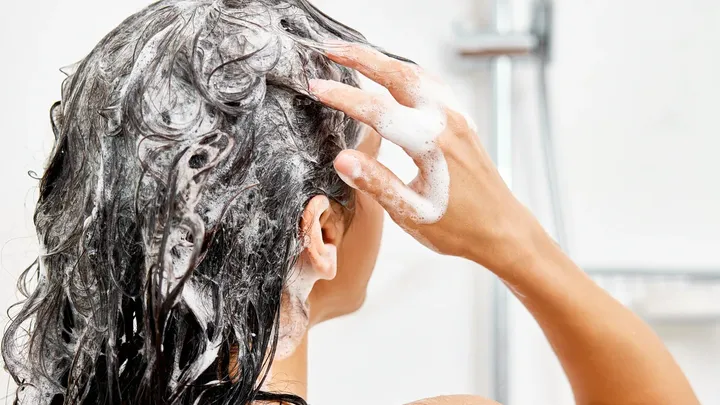
Shampoo, rinse, conditioner, rinse. For most people, the order has never changed. But if you have fine hair, conditioner can sometimes leave it looking flat again by the afternoon, especially when too much product ends up near the roots.
That's why some hairstylists are recommending a simple swap. It doesn't require expensive products or extra time in the shower. However, experts warn that it isn't suitable for everyone, and the scientific evidence behind it remains limited.
Why putting conditioner first might help
Conditioner helps smooth the hair's outer surface, making individual strands softer and easier to comb. But for people with fine hair, even a small amount of leftover product can make the hair feel heavy.
Reverse washing changes that.
Dermatologist Dr. Sandra Oska, speaking to Vogue Adria, explains that conditioning first can help hair stay smooth without sacrificing volume at the roots.
She describes how conditioner forms a temporary protective coating over the hair shaft. Shampooing afterward removes some of the excess product, potentially leaving the hair feeling lighter.
L'Oréal Paris also suggests reverse washing as an option for people who want softer hair without the heavy finish that traditional conditioning sometimes creates.
The important distinction is that reverse washing doesn't actually make individual hairs thicker. It may simply help fine hair look fuller by reducing the amount of product left behind.
How to try reverse washing at home
Celebrity hairstylist Kee Taylor, also interviewed by Vogue, recommends leaving conditioner on for approximately two to five minutes.
Here's a straightforward way to try it:
- Wet your hair thoroughly with lukewarm water.
- Apply a small amount of conditioner from the middle of your hair to the ends, avoiding your scalp.
- Leave it on for two to five minutes, or follow the product instructions.
- Rinse out the conditioner thoroughly.
- Shampoo your scalp and roots, gently massaging with your fingertips.
- Rinse well, allowing the shampoo to run through the lengths without aggressively rubbing the ends.
Some variations involve shampooing without rinsing out the conditioner first. However, rinsing between the two steps is a simple place to start.
One common mistake is applying too much conditioner directly to the roots. Even with reverse washing, that can leave fine hair feeling weighed down.
Who should try it, and who should avoid it?
According to Grazia USA, reverse washing may be worth trying if your hair is naturally fine, becomes greasy quickly, or loses volume soon after washing.
People with thinning hair may also prefer the lighter finish, although the technique won't prevent hair loss or stimulate new growth.
For very dry, curly, bleached, or chemically damaged hair, the traditional order may work better. Shampooing last can remove too much of the conditioning effect, leaving hair harder to detangle.
Cosmetic chemist Tonya Lane, interviewed by Coveteur, suggests another option: conditioner first, shampoo second, followed by a little conditioner again on the ends.
That may offer a better balance for hair that needs extra moisture.
Does reverse washing actually work?
There's an important catch: scientific research directly comparing reverse washing with traditional shampooing is limited.
Healthline notes that there isn't sufficient scientific evidence to establish the method's effectiveness.
Still, for someone whose hair regularly looks flat after conditioning, changing the order is a relatively low-risk experiment.
Try it over your next several washes, perhaps for two weeks, and compare how your hair feels when dry and later in the day.
If it feels lighter and holds its volume longer, the change may be worth keeping. If your ends become dry or tangled, return to your usual routine.
Sometimes the most useful adjustment isn't buying another hair product. It's changing how you use the two you already have.