
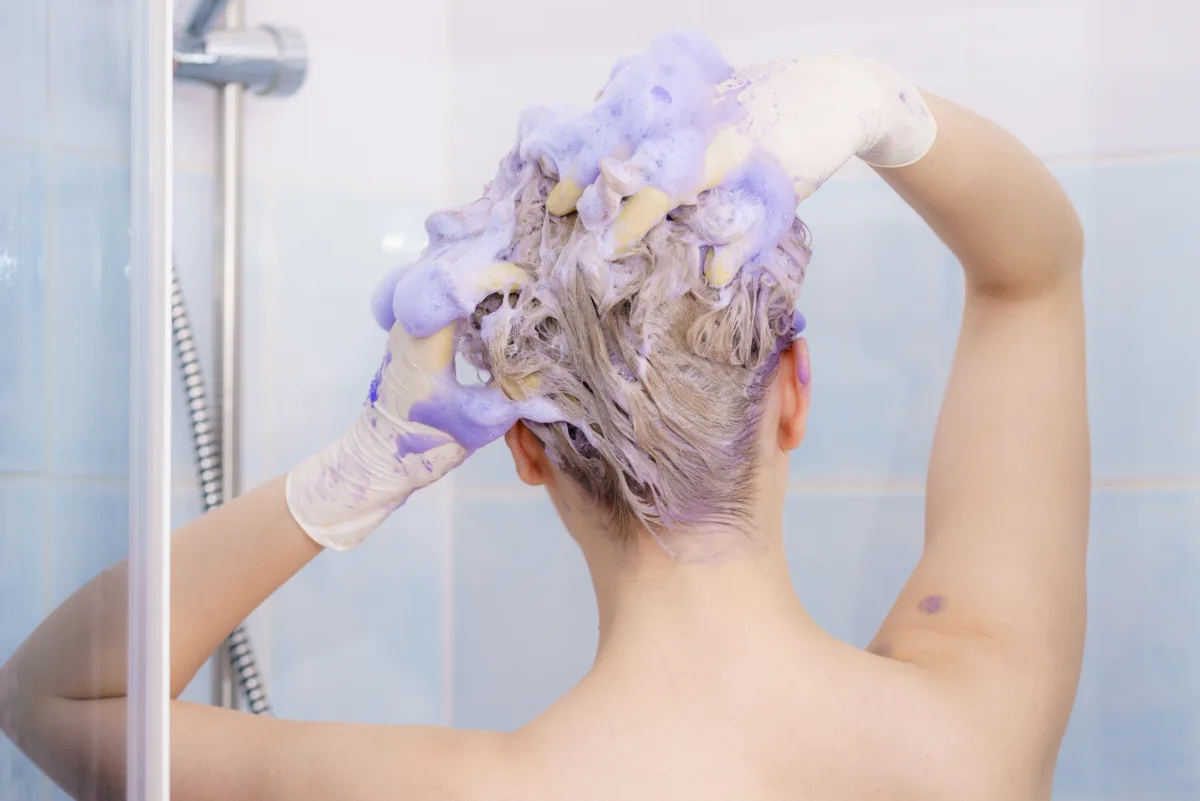
Anyone who stops coloring their gray hair soon finds a new bottle on the bathroom shelf: purple shampoo. It works on a simple color principle. Violet sits opposite yellow on the color wheel and cancels it out, so a yellow tint in silver hair looks cooler and brighter again.
But hairdressers see the same mistake over and over. Because the product works, people start using it at every wash. After a few weeks, their hair takes on a lilac or bluish tint, or looks dull and dry. Spanish hairdressers are now warning against daily use, and the solution is surprisingly simple: use it less often and watch the clock.
Why use purple shampoo?
Gray hair doesn't always stay beautifully silver. Sun exposure, chlorine, hard water, smoking, pollution, and frequent heat styling can all contribute to yellowing. With less natural pigment, discoloration is also more noticeable.
Purple shampoo, also called silver shampoo, contains violet pigments that neutralize unwanted yellow tones in gray, white, and blonde hair. It doesn't actually lighten your hair. Instead, it changes how the existing color appears.
The problem starts when those pigments build up. Gray and white hair can be particularly porous, meaning some strands absorb more pigment than others. Using purple shampoo too frequently can leave patches of hair looking lavender, blue, or unusually dark.
Hairdressers explain that purple shampoo should be treated as a toning treatment rather than an everyday cleanser.
How often should you actually use it?
According to experts, once or twice a week is generally enough to maintain cooler tones. Hairdressers offer similar advice, recommending that people alternate purple shampoo with a regular nourishing shampoo.
However, there's no universal rule. If you have naturally gray hair that barely yellows, using purple shampoo once every two weeks may be sufficient. If you wash your hair infrequently, you might need it even less often.
Start with a weekly treatment, check the results, and adjust according to your hair's needs. Always follow the instructions on your particular bottle.
Also remember that a purple shampoo isn't the answer to every color problem.
If your hair develops a greenish tint after swimming, copper deposits from pool water may be responsible. A specialized mineral-removing treatment is more appropriate. Meanwhile, blue shampoo is generally better suited to orange tones in darker hair.
Protecting your hair from excessive heat and sunlight, along with regular conditioning, can also help maintain its appearance.
The mistake you can avoid with a timer
Frequency isn't the only thing that matters. Leaving purple shampoo on too long can deposit excessive pigment, particularly on fine, damaged, or porous hair.
Some formulas require just one to three minutes, while others recommend longer. Never assume that leaving it on for ten minutes will produce better results.
Set a timer according to the product label and rinse thoroughly. If you're concerned about uneven results, try a small strand test first.
You can also distribute the shampoo more evenly by mixing it with a little regular shampoo, provided the manufacturer's instructions allow it. Finish with a moisturizing conditioner to keep your hair soft.
Already have a lilac tint? Here's what to do
If your silver hair has started looking purple, stop using the toning shampoo temporarily.
Wash your hair with your usual shampoo and allow the excess pigment to fade. A clarifying shampoo may help remove unwanted violet tones, although frequent use can cause additional dryness. Follow with a moisturizing conditioner.
If the discoloration persists, a hairdresser can recommend an appropriate treatment.
The most useful rule is to remember that purple shampoo is for correcting unwanted yellow tones, not for every wash. Your gray hair may need considerably less of it than you think.