
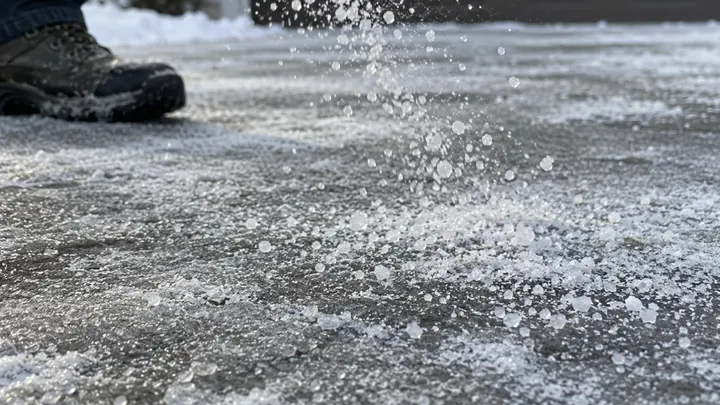
The first frost is approaching, and that bag of road salt in the shed might seem like the easiest way to keep your driveway and garden paths safe. But if you've had new paving installed this year, spreading salt could be an expensive mistake.
Concrete specialists recommend avoiding de-icing chemicals on new concrete during its first winter. And there's another reason to be careful: the salt you scatter on your driveway can eventually end up in your lawn, flower beds and hedges.
Fortunately, keeping your paths safe doesn't always require salt.
Why new paving needs extra care during its first winter
A newly laid concrete driveway might look perfectly solid after just a few days. You can usually walk on it quite soon, and properly installed concrete can support vehicles once it has gained sufficient strength.
But that doesn't mean the concrete has finished developing.
According to the Michigan Concrete Association, concrete continues gaining strength for up to 90 days and can take as long as a year to dry out fully.
During that first year, it's particularly vulnerable to repeated freezing and thawing. The association advises using sand for traction rather than ice-melting chemicals wherever possible.
The same advice doesn't automatically apply to every type of paving. Concrete slabs, brick pavers, ceramic tiles and natural stone have different properties, so it's worth checking the manufacturer's recommendations.
How road salt can damage concrete
Road salt lowers the freezing point of water, helping to melt ice on slippery surfaces. Unfortunately, that can also create conditions that damage porous concrete.
When salty water enters tiny pores in the surface and later freezes, the expanding ice puts pressure on the surrounding material. Water expands by approximately nine percent when it freezes. Repeated freezing and thawing can eventually cause small pieces of the surface to break away, leaving rough, flaky patches. This is known as concrete scaling.
Older, properly cured concrete generally handles winter conditions better. However, standing water, poor drainage and repeated salt exposure can still increase the risk of damage.
Dutch paving specialists also point out that many modern concrete paving products are manufactured to resist frost. Good drainage remains especially important, regardless of the paving's age.
Your hedge and lawn could suffer too
The damage doesn't necessarily stop at the edge of your driveway. When snow and ice melt, dissolved salt can wash into nearby flower beds, lawns and hedges.
According to Iowa State University Extension, excessive salt in the soil makes it harder for plants to absorb water, even when the ground is moist. Salt can also interfere with nutrient uptake and damage soil structure.
The effects may not become obvious until later. Evergreen hedges can develop yellow or brown needles, while other shrubs may show scorched leaves, weakened growth, or dying branch tips. Plants growing immediately beside regularly salted driveways are particularly exposed.
What to use instead of road salt
The simplest alternative is ordinary coarse sand or fine gravel. Neither melts ice, but both can provide extra grip on slippery surfaces without adding de-icing chemicals.
The University of Illinois Extension recommends concentrating salt applications on higher-risk areas, such as steps and sloping walkways.
Start by clearing snow with a suitable shovel or snow pusher. Then spread sand where extra traction is needed.
If ice remains dangerously slippery, a small amount of de-icer may still be necessary. Safety comes first, but avoid covering the entire driveway unnecessarily.
Some alternative de-icers contain calcium or magnesium chloride. Although these can be less damaging to plants than ordinary rock salt, they aren't automatically safer for concrete.
One last thing to check before winter
Take a look at your paving after the next heavy rainfall. If puddles remain for hours, clear blocked drains, remove fallen leaves, and check for damaged joints. Water collecting on or beneath paving can cause problems when temperatures drop below freezing.
For newly installed concrete, ask your contractor which winter treatments are suitable.
A little sand, good drainage, and careful snow removal could help protect both your driveway and the plants growing alongside it.