
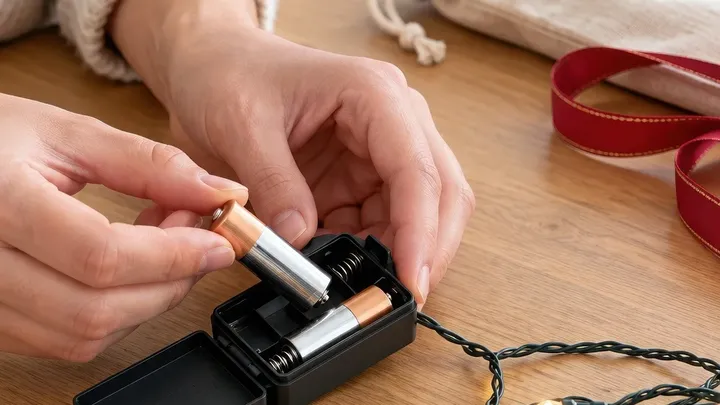
You take last year's Christmas lights out of storage, switch them on, and nothing happens. When you open the battery compartment, there's a strange white crust around the metal contacts. The batteries have been sitting inside since last Christmas.
It's a familiar problem, especially now that decorations are coming out of the attic. And with the festive season coming up, many households may be stocking up.
But buying spare batteries is one thing. Storing them properly is another. And according to battery manufacturers, one old household trick is best forgotten.
Why batteries are back in the spotlight
In the United States, battery prices vary considerably depending on the brand and pack size. For example, Walmart sells a 48-pack of Great Value AA or AAA alkaline batteries for $14.97, roughly 31 cents per battery.
Action's online shop currently lists a Duracell Everyday Alkaline megapack containing 24 AA and 24 AAA batteries for €19.95 ($22.5). That's roughly 42 cents per battery. Delivery costs another €5.99, bringing the total to €25.94 ($29) if you order only the pack.
A large pack can be convenient if you regularly need batteries for remotes, toys or seasonal decorations. But where should you keep the ones you won't use immediately?
Should batteries really go in the fridge?
For years, some households kept spare batteries in the fridge door. The idea was that keeping them cold would help them hold their charge longer.
But Duracell's advice is clear: ordinary household batteries should be stored in a dry place at room temperature.
The manufacturer says refrigeration isn't necessary or recommended. Extreme temperatures can also reduce battery performance.
Another battery manufacturer, Energizer, warns that taking batteries in and out of cold storage can cause condensation. That moisture may corrode the contacts or damage the battery's protective seal.
So there's no need to make space next to the butter. A dry cupboard or drawer is a better choice.
Where should you keep a large pack of batteries?
According to Duracell's battery guidance, unused batteries are best left in their original packaging until needed.
That packaging helps keep the metal ends from touching other batteries or objects. This matters because loose batteries can short-circuit when their contacts touch metal.
Avoid storing batteries near radiators, in direct sunlight, or in places that become unusually hot. A dry drawer inside the house is generally suitable.
It's also worth keeping old and new batteries separate. Duracell advises against mixing them in the same device, because differences in charge can increase the risk of leakage.
Stored under suitable conditions, many alkaline batteries can last several years. Energizer gives a typical shelf-life range of five to ten years, although this varies by product and storage conditions. Always check the date printed on the packaging.
Why Christmas lights sometimes develop white crust
That white, powdery residue around the contacts is often a sign of battery leakage.
Even when a decoration is switched off, the batteries may remain inside for months. Some devices continue drawing a small amount of power, while exhausted batteries become more likely to leak.
Duracell recommends removing batteries whenever a device won't be used for several months. It also advises taking out worn-out batteries promptly.
For Christmas decorations, that means removing the batteries before packing everything away in January.
What if the batteries have already leaked?
Don't simply insert fresh batteries over the white residue.
Duracell recommends wearing household gloves and eye protection, working in a ventilated area, and carefully cleaning the affected contacts with a cotton swab or toothbrush.
Make sure the compartment is completely dry before trying fresh batteries. If the metal contacts are badly damaged, the decoration may no longer work reliably.
In the Netherlands, used household batteries can be returned to collection points in supermarkets and other participating shops. Leaking batteries should be wrapped separately in plastic before being handed in.
The easiest habit to remember this Christmas is also the most useful: keep spare batteries in a dry drawer, and take them out of your decorations before putting them away for another year.