
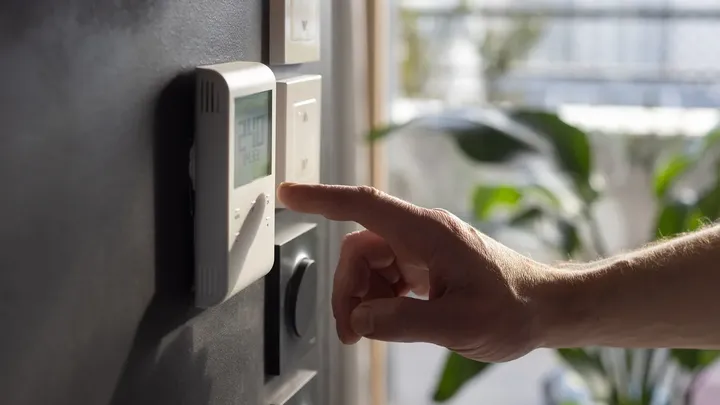
Every autumn, the same argument returns: should you turn the heating right down at night, or leave it running so the house doesn't have to warm up again in the morning?
With an ordinary gas boiler and radiators, the answer is fairly straightforward. Energy advice organisations estimate that setting the thermostat to 15°C overnight can save around €60 or nearly $80 a year.
But there's an important exception. If your home has underfloor heating or a heat pump, lowering the temperature too much could actually increase your energy consumption.
So which setting makes the most sense for your home?
Gas boiler and radiators: 15°C is usually the best choice
For households with a conventional gas boiler and radiators, energy agencies recommend reducing the thermostat to 15°C about an hour before bedtime.
The reasoning is simple. Keeping a house warm all night means continually replacing heat escaping through the walls, windows and roof. Allowing the temperature to fall reduces that heat loss, even though the boiler needs to work the following morning again.
The overnight adjustment saves approximately €60 ($80) annually in its example of a moderately insulated, two-person corner house built in 1970, using a calculated gas price of €1.37 ($1.53) per cubic metre. Keeping the daytime temperature at no more than 19°C can save around €170 ($ 190) annually in the same example home.
These aren't guaranteed savings. Your actual benefit depends on insulation, existing heating habits, gas prices and the size of your property.
A programmable thermostat makes the adjustment easier. You can arrange for the heating to lower automatically before bedtime and return to a comfortable temperature before breakfast.
Underfloor heating or a heat pump? The advice changes
Underfloor heating and heat pumps generally operate at lower water temperatures than conventional radiator systems. That makes them efficient, but also slower to respond.
Lowering the thermostat to 15°C overnight can mean a lengthy warm-up the next morning. With a heat pump, recovering those lost degrees may require less efficient operation, potentially wiping out the overnight saving.
That's why heat pump advice recommends much smaller temperature adjustments.
For homes with underfloor heating, a ground-source heat pump, or good insulation combined with heat-recovery ventilation, it advises keeping the temperature steady overnight.
For other heat pump installations, it suggests lowering the thermostat by just one degree in reasonably insulated homes or two degrees in moderately insulated properties.
A hybrid heat pump, which works alongside a gas boiler, generally benefits from a smaller reduction of one or two degrees rather than the traditional five-degree drop.
British energy experts make the same distinction
Britain's Energy Saving Trust also advises boiler owners to heat their homes when needed, rather than leaving the heating on continuously.
For conventional boilers, it suggests switching the heating on approximately 30 minutes before getting up and off around 30 minutes before bedtime.
But its advice for heat pumps is different: keeping them operating for longer periods, with little or no temperature reduction, is generally more efficient.
Financial advice website MoneySavingExpert also discusses an alternative approach known as low and slow. Heating specialists argue that steady, lower-temperature heating may work better with certain modern condensing boilers, particularly in well-insulated homes.
The best choice therefore depends on more than the thermostat alone.
Which overnight setting suits your heating system?
Heating system | Recommended night setting |
|---|---|
Gas boiler with ordinary radiators | 15°C |
Gas boiler with underfloor heating | Around 17–18°C, or steady |
Hybrid heat pump | Usually 1–2°C below daytime setting |
Fully electric heat pump | Usually steady; sometimes 1–2°C lower |
Ground-source heat pump | Keep temperature steady |
These are general starting points. Your installation, insulation and heating controls can affect the most efficient setting.
One important warning about cold and damp homes
Reducing heating costs shouldn't mean allowing your home to become excessively cold.
If you regularly notice condensation on windows, damp walls or mould, reducing the night temperature sharply could make matters worse. Cold surfaces encourage moisture to settle, particularly in poorly ventilated rooms.
Consider getting advice from an independent energy adviser before making substantial changes.
For most households with ordinary radiators and a gas boiler, lowering the thermostat overnight remains a sensible money-saving habit. But if you've switched to a heat pump or underfloor heating, the old 15°C rule may no longer be the cheapest option.