
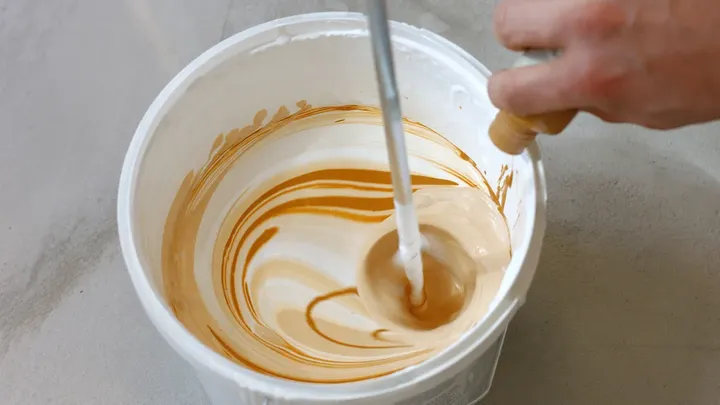
After a paint job, the tin rarely ends up empty. You put what's left in the garden shed or garage, ready for the next time a scuff appears on the hallway wall. It seems sensible to keep the original colour rather than buy another tin.
But as November brings colder nights, there's something worth checking before you rely on that leftover paint. The temperature in an unheated shed can drop surprisingly quickly, and the conditions there may not be ideal for storing paint. A few minutes spent checking your tins now could save you an unpleasant surprise when you next need them.
Why cold weather can damage some paint
Water-based wall paints, including many emulsion, latex and acrylic paints, are particularly sensitive to freezing temperatures. That's because they contain water, which can freeze and expand when the temperature drops below zero.
This can disrupt the paint's structure, causing the ingredients to separate. The result may be lumpy, difficult to spread and unable to give your wall an even finish.
Solvent-based paints are generally more resistant to freezing, but they still need suitable storage conditions. If you're unsure which type you have, check the label.
Can you still use paint that has frozen?
Dutch paint maker Colora warns that water-based paint that has frozen can no longer be used. Wijzonol also says freezing affects the paint's properties. It may develop an unpleasant smell or become lumpy.
UK paint supplier Promain offers a slightly more cautious view, explaining that some paint can survive a few freeze-and-thaw cycles. It recommends letting the tin warm slowly to room temperature before stirring it thoroughly.
However, don't count on being able to rescue it. If the paint remains separated, smells unusual or has an uneven texture, it's best not to use it. When in doubt, follow the manufacturer's advice.
Where should you keep leftover paint?
The safest option is a cool, dry place where the temperature stays relatively stable and never drops below freezing. Wijzonol recommends storage between 5°C and 25°C.
A cupboard or suitable indoor storage space is usually better than an exposed garden shed. An uninsulated garage can also be risky if temperatures fluctuate. Keep tins upright, away from direct sunlight and off cold concrete floors.
Make sure the lid is tightly closed and clean the rim before sealing it. If only a small amount remains, Colora recommends transferring it to a smaller container, leaving less air inside.
How long does paint keep?
Storage conditions make a big difference. GAMMA says water-based paint can keep for at least a year, while solvent-based paint can last at least two years.
Before using an older tin, check its smell and consistency. Stir it thoroughly and look for lumps or signs that the ingredients will not mix properly. A dried skin on the surface can sometimes be removed carefully, but paint that remains lumpy or smells unpleasant should be discarded.
Dispose of unwanted paint properly
Never pour leftover paint down the sink or into an outdoor drain. In the Netherlands, GAMMA also advises taking it to a municipal chemical waste collection point or recycling centre. In Belgium, paint leftovers belong at the Klein Gevaarlijk Afval collection point at your local container park, according to GAMMA Belgium.
In the UK and US, check your local council or household waste authority for instructions, as disposal rules vary by area.
Before the first proper frost arrives, take a moment to bring your leftover paint indoors. You might be glad you did when the next little decorating job comes around.