
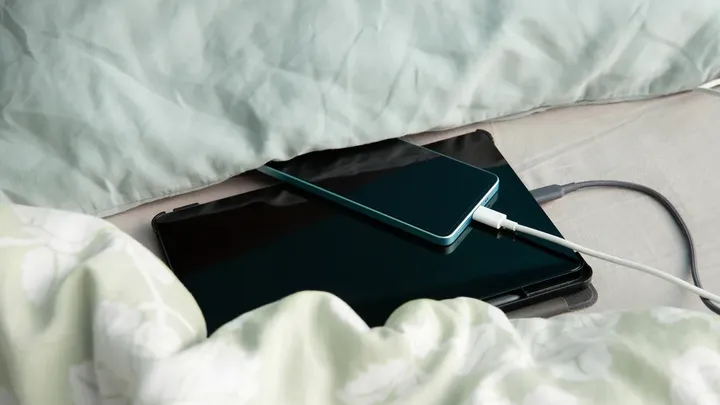
The evenings are getting longer, and for many people, the tablet comes to bed with them, plugged in because the battery ran low during the evening news. Others leave their phone charging beside their pillow while they sleep.
But firefighters warn that this everyday habit can increase the risk of a fire. The problem isn't simply leaving a device plugged in. It's where you put it.
Why charging on a duvet can be dangerous
Most modern phones, tablets and laptops contain lithium-ion batteries. They're generally safe when used correctly, but damaged batteries, faulty chargers and excessive heat can create dangerous situations.
According to the Dutch fire service, both batteries and chargers can become warm during use. That's why chargers should always be placed somewhere they can release heat.
A pillow, thick blanket, or comforter can trap that warmth instead. If a device or charger develops a fault, the surrounding bedding also provides material that can catch fire.
Even Apple's official safety instructions warn against sleeping on a charging phone or placing it under a pillow, blanket or your body.
Firefighters have seen what can happen
This isn't just a theoretical concern.
In March 2022, firefighters in Harrow, London, attended a house fire that damaged half the ground floor of a property.
According to the London Fire Brigade's incident report, investigators believed the fire was caused by a lithium-ion battery failure in a mobile phone that had been charging on top of bedding.
Fortunately, no injuries were reported.
The incident prompted firefighters to remind residents that electrical devices should be charged on hard, flat surfaces where heat can escape.
And the warning extends beyond smartphones. London Fire Brigade specifically advises against covering laptop chargers or using laptop power leads in bed.
Where should you charge your phone instead?
The safest option is to move your phone or tablet away from the bedding altogether.
A hard, stable, nonflammable surface with good ventilation is preferable to a mattress, sofa cushion or blanket. A suitable desk or countertop can work, provided the charger and device aren't covered.
Fire services also recommend several other precautions:
- Unplug when charging is complete. Avoid leaving devices connected unnecessarily, especially overnight.
- Use a suitable charger. Choose the manufacturer's charger or a genuine, compatible replacement from a reputable supplier.
- Inspect cables regularly. Stop using chargers with frayed wires, damaged plugs, or cracked housings.
- Keep chargers uncovered. Don't tuck the adapter under bedding, clothing or cushions.
- Watch for unusual heat. A device that becomes excessively hot, swells, or develops a strange smell needs attention.
If a battery begins smoking or showing signs of fire, move away, avoid handling it, and call emergency services.
Don't forget the chargers in children's bedrooms
Children and teenagers often use phones or tablets while lying in bed. It's worth checking where their devices end up when the lights go out.
The same applies to grandparents who keep a tablet beside the bed for reading, watching television, or video calls.
Before buying an inexpensive replacement charger, particularly during holiday sales, check that it's compatible with the device and comes from a trustworthy supplier.
Finally, make sure your home has working smoke alarms, including appropriate coverage near bedrooms.
You don't need to stop using your phone or tablet in bed. Just move it to a safer charging spot before plugging it in. That small change helps prevent unnecessary heat buildup and reduces an avoidable fire risk.