
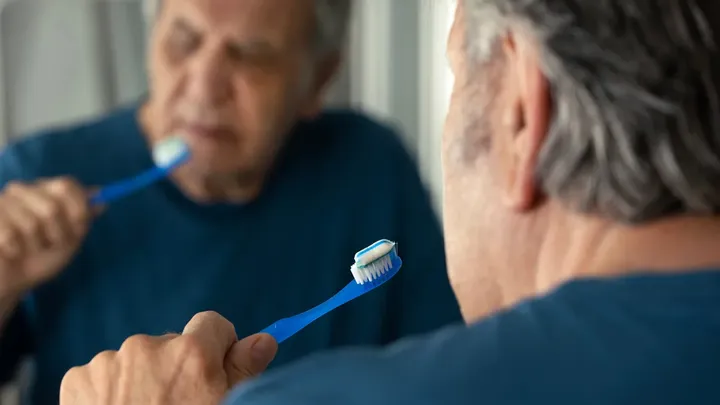
Finish breakfast and then head straight to the bathroom. It feels like the logical order: eat first, then brush away whatever is left behind. But according to dentists, that familiar morning routine might be worth changing, especially after acidic drinks like coffee, tea, or juice.
Why orange juice and brushing don't mix
Tooth enamel is the hard outer layer that protects your teeth. Although it's extremely strong, repeated exposure to acid can gradually wear it away.
Orange juice contains citric acid, which temporarily weakens the enamel's surface. The same applies to grapefruit juice, lemons, fizzy drinks, and many sports drinks.
If you brush while your enamel is in this softened state, the friction can contribute to further wear. And unlike your skin, enamel that's been permanently lost doesn't grow back.
Your mouth does have a natural defense, however: saliva. It helps wash away acids, restore a healthier balance in your mouth, and support the hardening of the enamel's surface.
That's why dentists often recommend giving your teeth some time before reaching for the toothbrush.
Should you wait 30 minutes or a full hour?
The advice varies depending on which dental organization you ask.
The Mayo Clinic recommends waiting a full hour after consuming acidic foods or drinks. Other dental experts suggest at least 30 minutes.
The UK's Oral Health Foundation, meanwhile, recommends waiting at least 30 minutes. It also suggests drinking water afterward to help rinse away acids.
Belgian dentistry professor Joke Duyck, from KU Leuven, has similarly advised allowing roughly half an hour to an hour between breakfast and brushing.
So if you finish your orange juice at 8 a.m., the conventional advice would be to wait until at least 8:30 a.m., or preferably 9 a.m. if following the Mayo Clinic's recommendation.
But what if you need to leave at 8:10? Fortunately, there's another option if you're usually rushing out the door.
Brushing before breakfast is a practical alternative
For anyone with a busy morning schedule, brushing before breakfast is a perfectly reasonable option. It also has some advantages.
While you sleep, bacteria accumulate in your mouth. Brushing when you wake up removes that buildup before you start eating.
Using fluoride toothpaste also helps strengthen your enamel against the acids you'll encounter throughout the day.
According to Colgate UK, brushing before breakfast can therefore be beneficial, particularly when your morning meal includes acidic foods.
You don't need to brush again immediately after eating. Instead, drink some water to help clear away leftover food and acid.
But is waiting an hour really necessary?
Interestingly, the traditional waiting rule isn't as scientifically clear-cut as it might seem.
A 2020 study found that delaying brushing after exposure to acid did not significantly reduce enamel wear in studies using human enamel.
That doesn't mean brushing immediately after orange juice has been proven harmless. It means the evidence for a strict waiting period is less conclusive than the familiar advice suggests.
Many dental organizations continue recommending a delay as a precaution.
What experts consistently agree on is more important: brushing twice daily with fluoride toothpaste and paying attention to frequent exposure to acidic drinks.
The simplest way to protect your teeth
If you enjoy orange juice at breakfast, you don't necessarily need to give it up.
You can brush before eating, then drink water afterward. If you prefer brushing after breakfast, follow the precautionary guidance and allow 30 to 60 minutes after acidic foods or drinks.
And whichever routine you choose, remember the basics: brush thoroughly for two minutes, twice a day, using fluoride toothpaste.
A small adjustment to your morning schedule may be easier than you think.