
After a stormy night, you notice a small puddle at the bottom of your window frame. Perhaps the windowsill feels damp, or there's water sitting in the track. Your first thought might be that the window seal has failed and an expensive repair is coming.
But before calling a window installer, there's something much simpler worth checking.
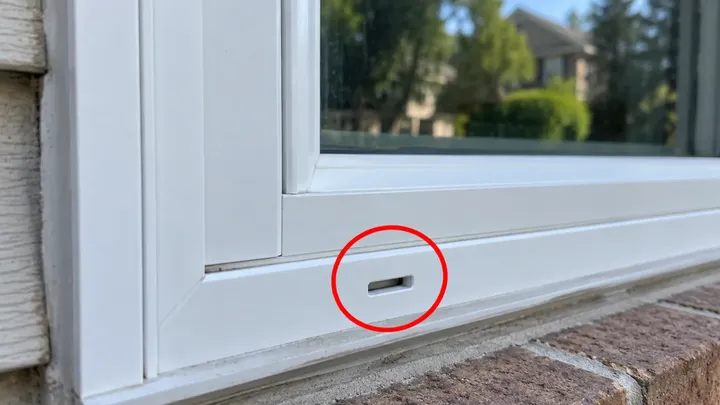
What are those tiny holes beneath your window?
Many vinyl (uPVC) and aluminum windows have small drainage openings along the bottom of their frames. They're called weep holes, and their job is to let rainwater escape. When dirt, leaves, or spider webs block them, water can collect inside the frame instead.
The good news? According to the US Department of Energy's Building America Solution Center, a glass of water can help you check whether these openings are working.
Take a close look at the outside bottom edge of your window frame. You may notice a couple of narrow slots or small rectangular openings. These are the weep holes. They're designed to drain water that gets past the outer parts of the window. A little water entering certain window tracks isn't necessarily a problem. The important thing is that it can drain back outside.
Dutch window industry organization VKG Keurmerk advises homeowners to check these drainage holes regularly because dirt and fallen leaves can clog them.
Not every window has visible weep holes. Some designs use different drainage arrangements, so check your manufacturer's instructions if you cannot find them.
How to test your window with a glass of water
You don't need specialist equipment to check the drainage.
Building America recommends pouring water into the interior drainage opening or window track and watching whether it comes out through the exterior weep holes.
Here's how to try it:
- Open the window and locate the bottom track and any visible drainage openings.
- Check outside to see where the water should exit.
- Slowly pour a small amount of clean water into the drainage track, without allowing it to overflow into the room.
- Watch the outside openings. Some water should drain through them.
If the water stays in the track or nothing comes out, there may be a blockage.
You can also lightly spray the exterior window surface with water to check drainage. Follow your manufacturer's guidance if the frame's drainage design is unclear.
How to clear blocked drainage holes safely
Fortunately, removing ordinary dirt usually doesn't require dismantling the window.
The Building America guidance recommends gently loosening debris with a small drain brush or pipe cleaner. Work carefully rather than forcing dirt farther into the opening.
For the surrounding frame, use lukewarm water, a soft cloth and a mild cleaner.
You may have seen the popular baking-soda trick for scrubbing dirty window tracks. However, baking soda is mildly abrasive, and not every frame finish tolerates abrasive cleaning. Unless your manufacturer approves it, stick with a soft brush and mild cleaner.
Once the opening is clear, repeat the water test.
One mistake you should never make
Those small holes might look like gaps that need sealing, especially when you're trying to stop rainwater getting inside.
But never cover weep holes with caulk, silicone sealant, or paint. Blocking them can trap water inside the frame, potentially damaging surrounding walls, insulation, and other building materials.
Make checking them part of your fall cleaning routine, particularly after heavy storms.
And remember, a clogged drain isn't the only possible cause of a leak. If water continues entering your home after the drainage system is clear, damaged seals, poor installation, or problems around the window may be responsible.
In that case, have a qualified window installer inspect it. A few minutes spent checking the drainage holes can help you rule out one simple problem before investigating a more expensive one.