
I’ll admit, I had never paid much attention to the small flap at the bottom of my washing machine. I knew it was there, but I had no idea what was behind it, so I simply ignored it for years. Then the machine started taking longer to finish, the laundry came out wetter than usual, and there was a slightly musty smell I couldn’t get rid of. When I finally opened that little hatch, the problem suddenly made a lot more sense...
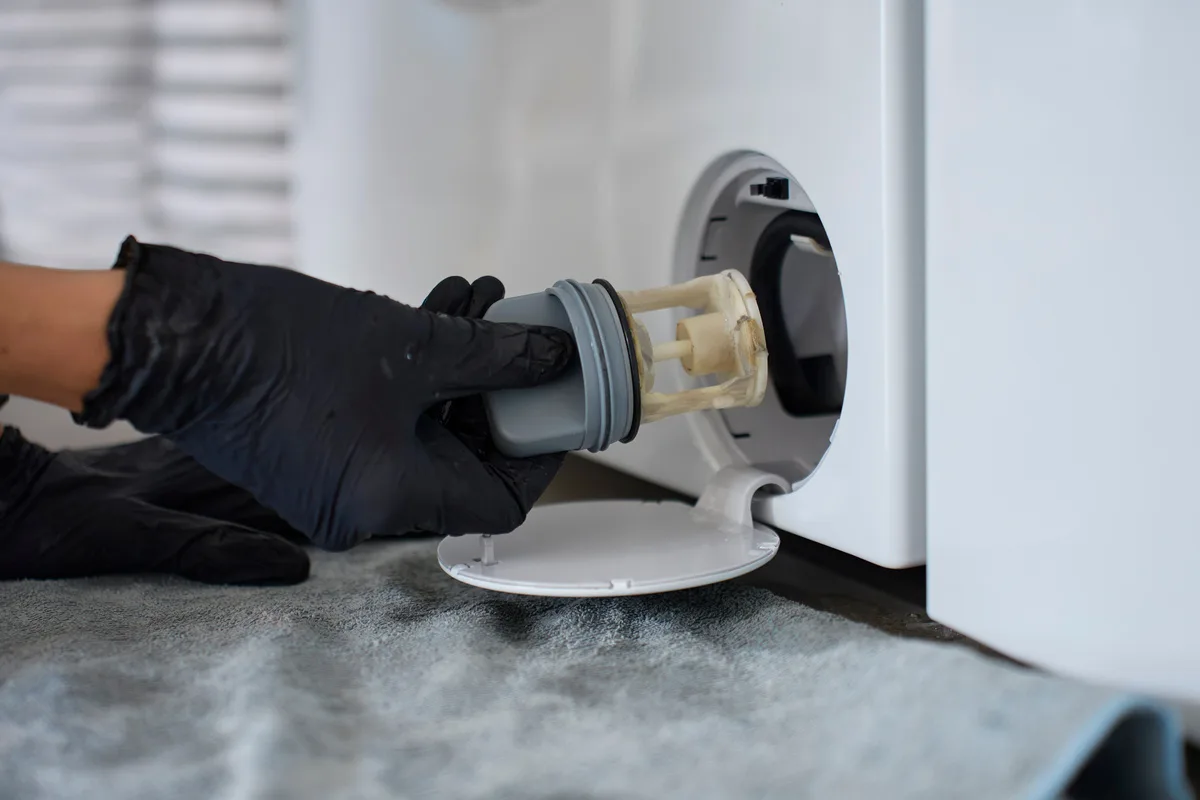
As far as washing machine maintenance goes, one of the simplest places to check is easy to miss. On many front-loading machines, a small flap near the bottom of the front panel hides the drain pump filter. Open it, and you may find lint, hair, a coin, a button, or a hair tie. Cleaning it is basic maintenance, and on many machines it takes only a few minutes. Let's find out more...
What the filter behind that little hatch does
At the end of a wash, the machine pumps dirty water out of the drum. The drain pump filter sits in that route and catches lint and small objects before they can reach or obstruct the pump.
As the filter fills up, the signs can be easy to blame on something else: laundry comes out unusually wet, the cycle takes longer, the machine struggles to spin, makes unfamiliar noises, or displays a drainage error. A dirty filter can also contribute to unpleasant odors because debris and moisture remain trapped in the area.
Not every washing machine is built the same way. This type of accessible pump filter is especially common on front-loaders, while some top-loading machines use a different system. If you cannot find a flap, check your model's manual rather than forcing a panel open.
How often should you clean it?
There is no single interval for every machine. Most experts recommend cleaning the pump filter six times a year. Others advise at least every three months, while some support model manuals recommend monthly cleaning for its front-loading washers.
The best way is to simply follow the manual for your own model. But if you have never opened the filter, checking it now makes sense. What you find will also show how quickly debris builds up in your household.
How to clean it without flooding the floor
Do not simply unscrew the round filter cap. Residual water may be sitting behind it, and there can be enough to spread across the floor. Follow the steps below instead:
- Empty the drum, switch the machine off, and unplug it. If you have just run a hot wash, let the water cool first.
- Open the service flap near the bottom front. Put towels down and slide a shallow tray or bowl underneath.
- If there is a small emergency drain hose, pull it forward, remove its cap, and drain the water into the container. Empty the container as needed.
- If there is no hose, loosen the filter cap very slowly and let a little water escape at a time. Tighten it again while you empty the tray if necessary.
- When the water stops, turn the filter counterclockwise and remove it. Pick out coins, hair, lint, and other debris, then rinse it and use a soft brush if needed.
- Wipe the filter housing, then reinstall the filter and tighten it securely by hand. Refit the drain hose cap, if present, and close the flap.
You may be surprised by what is inside
Coins, buttons and hair clips are exactly the sort of objects these filters catch. Prevention is simple: check pockets before each wash and remove loose items that could disappear into the machine.
If cleaning the filter does not solve slow draining, wet laundry, or a drainage error display, the problem may be elsewhere, such as a kinked drain hose, another blockage, or a pump fault. In that case, you will still have ruled out one of the simplest causes before arranging for a repair technician.