
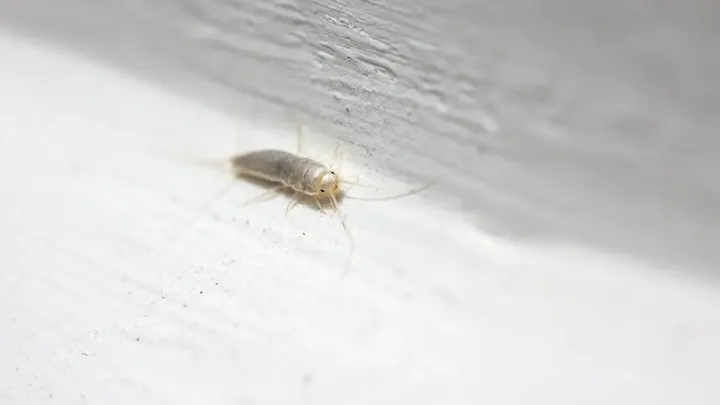
You spot a tiny grey insect racing along the skirting board, but it disappears before you can get a closer look. A few days later, you see another one. You clean the bathroom, open a window and check for damp, yet they keep showing up.
The problem might not be your cleaning routine. These insects can thrive in conditions where you wouldn't normally expect to find these pests, and the way you deal with them depends on identifying which type has moved in.
It might not be what you think it is
The culprit could be a paper silverfish, a close relative of the familiar silverfish often found in bathrooms. According to the Dutch pest experts at KAD, paper silverfish prefer warm, relatively dry surroundings and can turn up in cupboards, attics, bookcases and along skirting boards.
They are usually greyish, spotted and around 10–15 millimetres long. However, they look so similar to ordinary silverfish that identifying them by sight alone can be difficult.
Where you find them offers a clue. Ordinary silverfish are more commonly associated with damp bathrooms and kitchens, while paper silverfish can thrive in dry, well-insulated homes.
Why cleaning may not solve the problem
Ordinary silverfish tend to favour damp conditions, so reducing moisture can help make a room less suitable for them. Paper silverfish are different. They can survive in drier rooms, meaning that scrubbing the bathroom or opening a window may not solve an infestation.
They also feed on materials found in everyday homes, including the starch and cellulose in wallpaper paste, books and paper. As a result, they can damage belongings as well as become an unwelcome sight around the house.
Even more surprisingly, KAD reports that paper silverfish can survive for months without food. The strongest individuals may last up to 300 days.
What can you do about paper silverfish?
If you keep spotting these insects, there are a few practical steps you can take to investigate the problem and limit their spread:
- Seal cracks and gaps. Check skirting boards, spaces around pipes and other places where insects could hide.
- Use sticky insect traps. Place them where you've spotted the insects to help identify which areas they frequent.
- Protect books and papers. Store important documents and vulnerable paper items in sealed plastic containers.
- Reduce clutter. This makes hiding places easier to spot, although cleaning alone won't eliminate an established infestation.
If you find insects in several rooms or notice damage to books and wallpaper, consider contacting a pest control professional. In flats, insects may also travel through shared spaces or pipe shafts, so treating just one room might not be enough.
When should you get help?
Seeing one insect doesn't necessarily mean you have a serious infestation. But repeated sightings, particularly in different rooms, are worth investigating.
If you're unsure which species you're dealing with, ask a pest professional to identify it before choosing a treatment.
The key is to identify the insect first. If it's a paper silverfish, cleaning more often may not solve the problem. Finding where the insects are hiding and addressing the infestation is a much better place to start.