
1. Start With the Easy Things
The method we tried is called Swedish Death Cleaning, and the name sounds far more dramatic than the process. Döstädning ("death cleaning") is a Swedish approach to gradually clearing unnecessary belongings so loved ones are not left to sort through one's things after one's death. The idea became internationally known through Swedish author Margareta Magnusson and her book The Gentle Art of Swedish Death Cleaning (2017). The idea is to go through your belongings while you are still able to decide what stays, what goes, and what might be useful to someone else. We found that the best way to begin was with ordinary things that carried very little emotional weight.
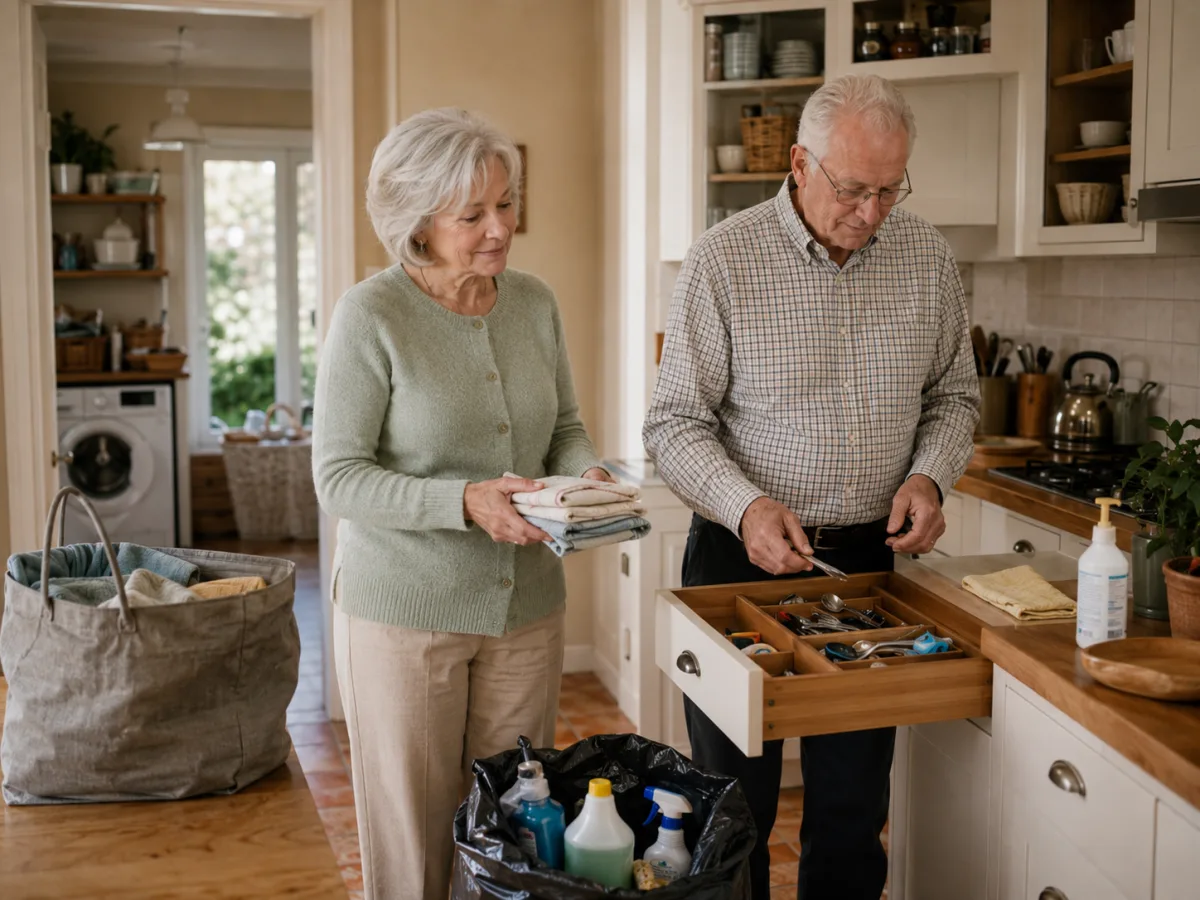
We started with kitchen drawers, old towels, duplicate utensils, unused cleaning products, and things we had forgotten we owned. We deliberately avoided photographs, letters, and family keepsakes at this stage. The rule was simple: if we used something, it stayed. If we had not touched it for years and could not imagine needing it soon, we discarded it. That made the first few decisions surprisingly easy.
If you want to try this yourself, begin with one small area rather than an entire room. A drawer, shelf, cupboard, or box is enough. Remove rubbish first, then separate useful things from duplicates and forgotten items. Donate what is still good and recycle what you can. Finishing one small space gave us a quick result, and that little bit of progress made it much easier to keep going.