
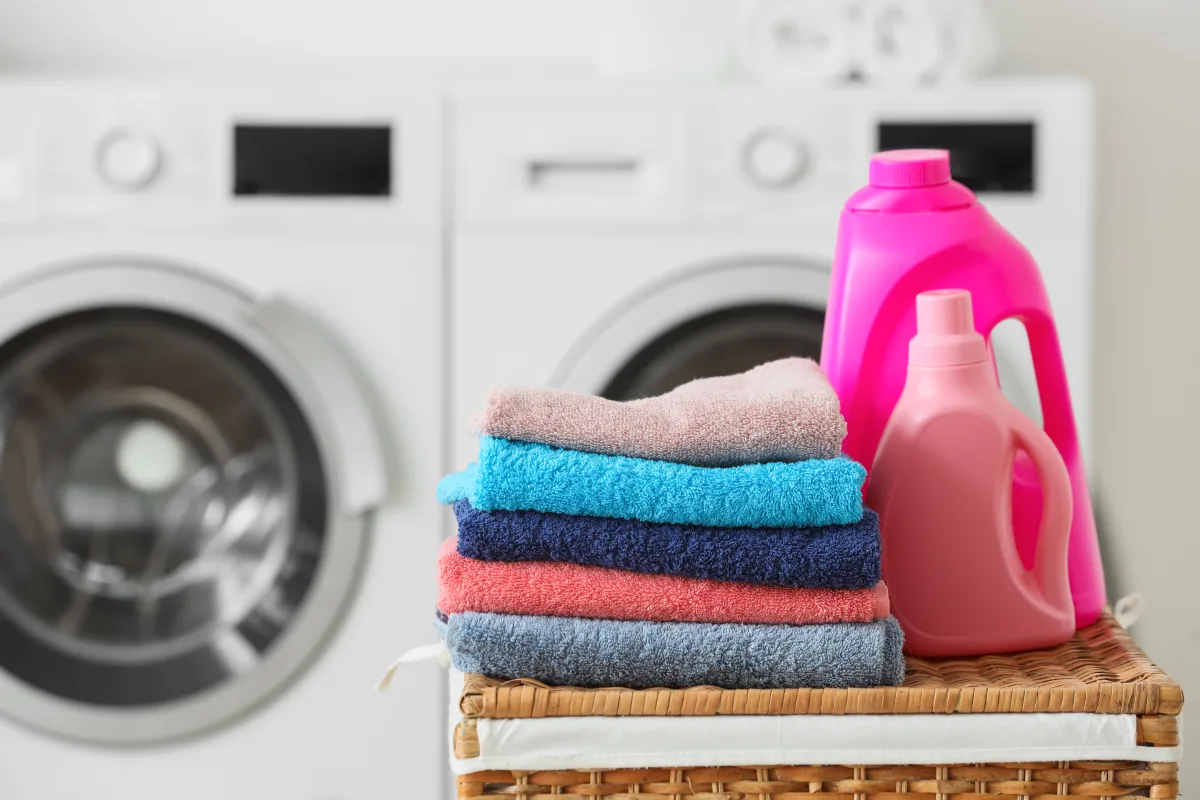
They were soft and thick when you bought them. A few months later, those same bath towels scrape against your skin like sandpaper and barely absorb water after a shower. Adding more fabric softener or an extra splash of detergent seems like the obvious solution, but laundry professionals disagree.
Let us look at why one habit you follow in the best interest of your bathroom linens could be working against you.
Why too much detergent makes towels stiff
More detergent doesn't necessarily mean cleaner laundry. In fact, it can leave your towels feeling worse.
Towels are made with thousands of tiny cotton loops that absorb water. Over time, leftover detergent, fabric softener, and minerals from hard water can build up between those loops, leaving towels stiff and less absorbent. Fortunately, changing a few washing habits can make a noticeable difference.
When you add too much detergent, your washing machine may struggle to rinse it all away. The leftover residue builds up in the fabric, causing the cotton loops to stick together rather than remain soft and fluffy.
This is particularly relevant for high-efficiency washing machines, which use less water. Professional laundry services recommend reducing detergent for towel loads, sometimes to half the usual amount. However, the right dose depends on your detergent, washing machine, and local water hardness.
Why fabric softener can make things worse
Fabric softener might make towels feel wonderfully smooth at first, but it can come with a drawback.
It works by leaving a thin coating on fabric fibers. Unfortunately, that coating can also make it harder for the cotton loops to absorb water. Over repeated washes, residue can accumulate and affect how well your towels dry.
Some appliance manufacturers suggest avoiding softener on towels when absorbency is a priority. Softener manufacturers maintain that their products can be used safely on towels when dosed correctly. If yours have become less absorbent, try leaving the softener out for several washes.
Your water hardness matters more than you think
Before reducing your detergent dose, there's another important factor to consider: your tap water.
Hard water contains calcium and magnesium, which can leave mineral deposits in towels. It can also make detergent less effective, meaning households with harder water may actually need more detergent than those with softer water.
For example, in Amsterdam and surrounding areas, the water hardness is 7.8 °dH, compared with a Dutch average of approximately 8 °dH.
In the US, New York City’s water is generally soft, averaging around 1.8 grains per gallon, while water hardness varies considerably across the rest of the country, particularly in parts of the Midwest and West.
Check your local water supplier's hardness figures and match them to the dosing table on your detergent packaging. Also consider how dirty your towels are and how full the washing machine is.
The simple shake that helps towels stay fluffy
What you do after washing matters, too.
Linen specialists recommend giving towels a vigorous shake as soon as they leave the washing machine. This helps separate the flattened loops and allows air to circulate between them.
If you're air-drying, shake them again halfway through drying and once they're completely dry. Avoid leaving them damp for hours in a poorly ventilated room.
If you use a tumble dryer, choose a moderate heat setting when the care label permits. Avoid excessive high-heat drying, which can make towels feel rougher and gradually damage their fibers.
How to rescue towels that already feel like cardboard
If your towels are already stiff, start with a simple reset rather than buying another laundry product.
Wash them separately from heavier clothing, using a properly measured detergent dose and the temperature permitted by their care labels. Leave out the fabric softener and select an extra rinse to help remove remaining residue.
For towels that are already clean but still feel coated, try a detergent-free rinse or wash cycle, followed by another thorough rinse.
Some laundry services recommend a one-off vinegar wash to remove buildup. However, vinegar can damage rubber components. Check your machine's manual before considering this method; an extra rinse is a straightforward alternative.
Once the towels are clean, shake them out and dry them properly. Repeat the improved routine over several washes. Existing fiber damage cannot always be reversed, but towels made stiff by residue may become noticeably softer again.