
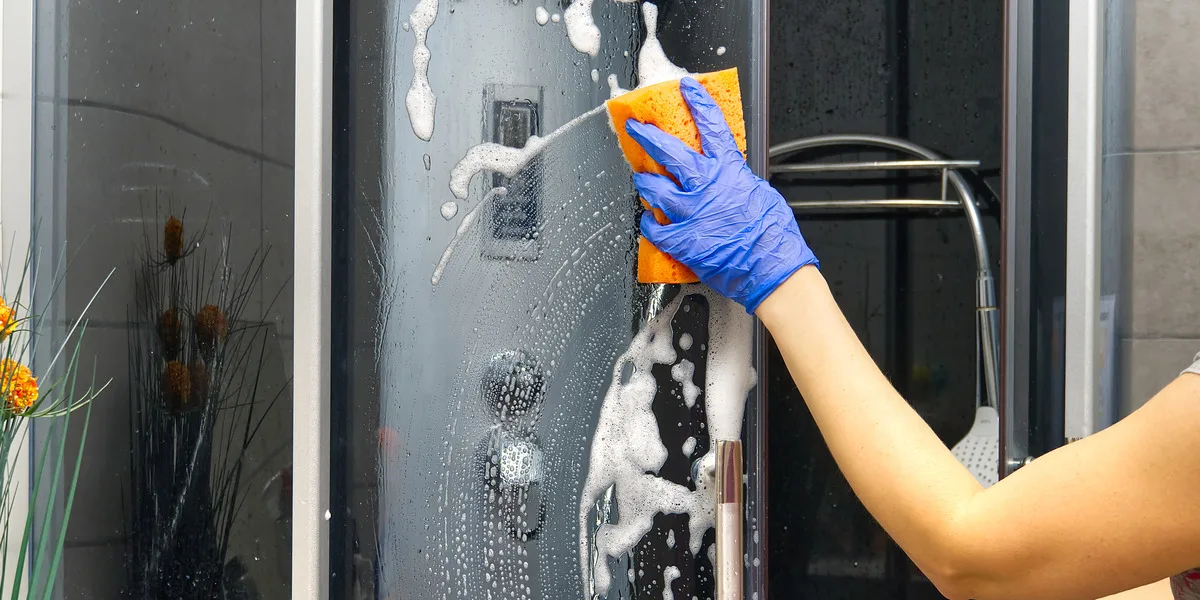
If you're anything like me, you've probably reached the point where you're tired of cleaning the shower glass only to find it looking cloudy again a few days later.
You spray it, scrub it, rinse it and step back — and somehow, it still doesn't look clean.
Before you blame your cleaning spray, there's something worth knowing: that cloudy film may not be dirt at all. It's often limescale, left behind when hard water dries on the glass. Over time, those mineral deposits build up and can leave your shower screen looking permanently foggy.
The good news is that you don't necessarily need an expensive specialist cleaner to get rid of it. A little white vinegar can help break down the buildup, while one very quick habit after each shower can stop it from coming back so quickly.
And that second part may be the one that saves you the most cleaning.
Why normal glass cleaner doesn't do much
Limescale isn't ordinary dirt. It's a mineral deposit, which is why spraying the glass with regular glass cleaner may leave you wondering why nothing seems to change.
White vinegar works differently. Its acidity helps break down the mineral buildup.
For a straightforward clean, mix equal parts white vinegar and warm water in a spray bottle. Spray it generously over the glass and leave it for around 10 minutes. Then wipe with a soft sponge or microfiber cloth, rinse well and dry the glass.
If some stubborn patches remain, try a little baking soda mixed with water as a gentle scrub. The baking soda helps because it is mildly abrasive, so it’s best to keep the two steps separate.
There are a couple of things to watch out for
Don't mix vinegar with bleach or bleach-based cleaners. The combination can produce harmful fumes, so keep the two well apart.
It's also worth checking whether your shower glass has a special protective coating. Some treated glass has its own cleaning instructions, and abrasive cleaners or strong products can damage the coating.
If you're unsure, check the manufacturer's instructions before using vinegar or baking soda.
The 20-second habit that makes the biggest difference
Getting rid of old limescale is only half the job. The easier solution is to stop as much of it from forming in the first place.
After your shower, take a squeegee and run it over the glass. It takes a few seconds and removes the water before it can dry and leave another layer of mineral deposits.
Shower-door manufacturers recommend this simple habit to help prevent water spots and limescale buildup.
Then leave the shower door open and run the bathroom fan or open a window for a while. That helps the remaining moisture escape instead of leaving the room damp.
So rather than repeatedly attacking cloudy glass with stronger cleaning products, try this: remove the buildup once, then spend 20 seconds removing the water after each shower.
Your future self, and your shower glass, will have much less work to do.