
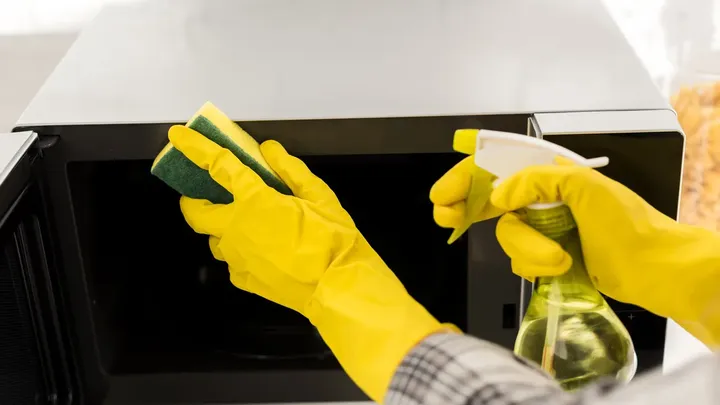
The inside of the microwave is one of those household jobs that's easy to put off. Soup splashes on the ceiling, dried sauce clings to the walls, and an unpleasant smell lingers long after dinner. Scrubbing can take time, and rough scouring pads may damage the interior.
There's a simple way to make the job easier, using an everyday kitchen ingredient and something you probably already have in your cupboard. But before you try this popular cleaning trick, there's an important safety warning from the US Food and Drug Administration (FDA) worth knowing.
How to loosen dried-on food without scrubbing
The idea is to let steam soften the mess so you can wipe it away with a cloth. Appliance maker Whirlpool recommends heating water in the microwave for this very reason. Adding lemon juice is optional.
Here's how to do it:
- Prepare a bowl. Add 1 cup (about 240 ml) of water to a microwave-safe container. Squeeze in some lemon juice if you like.
- Heat the water. Follow your microwave's manual for the recommended heating time. Whirlpool suggests heating a cup of water for two to five minutes for heavy soil, but the right time depends on your appliance.
- Let it stand. Once the microwave stops, leave the door closed for a few minutes so the steam can soften the dried-on food.
- Wipe the interior. Carefully remove the bowl using oven mitts. Wipe the walls, ceiling and door with a soft, damp cloth.
The steam does most of the work. Lemon is an optional addition, and Whirlpool also recommends vinegar as another option.
The FDA warning you shouldn't ignore
The FDA has received reports of serious burns caused by water erupting from a cup after being overheated in a microwave.
This can happen when water becomes superheated: it gets hotter than its normal boiling point without visibly bubbling. Moving the container or disturbing the water can then trigger a sudden eruption.
The risk is especially associated with heating water by itself in a very smooth container. Adding lemon may change the conditions, but it isn't a guarantee against injury.
To reduce the risk, follow your microwave manufacturer's instructions and don't heat water longer than recommended. Avoid immediately grabbing or stirring the bowl when the timer stops. Let it stand undisturbed, then remove it carefully with oven mitts, keeping your face and hands away from the top.
Read the FDA's guidance on microwave ovens and superheated water before heating water this way.
What if the stains won't come off?
For stubborn splashes, let the steam do its work before wiping again. If necessary, use a little mild dish soap on a soft cloth or sponge, then wipe with clean water and dry.
Avoid steel wool, abrasive cleaners and rough scouring pads, which can damage some microwave interiors. You can also remove the turntable and wash it separately according to your appliance's instructions.
Whirlpool recommends cleaning a frequently used microwave regularly to prevent food residue from building up. Wiping spills once the appliance has cooled is easier than tackling hardened splashes days later.
If you have a combination microwave with a grill or convection function, check its manual before using a cleaning method. Some models have specific instructions or a built-in steam-cleaning cycle.
The trick itself is simple: soften the mess first, then wipe it away. Just remember that hot water can be dangerous even when it doesn't look like it's boiling.