
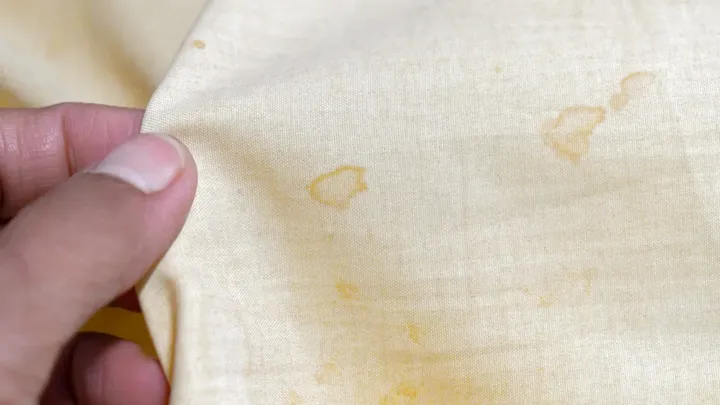
You take the pillowcase off to put on a clean one, only to notice that the pillow underneath has developed a yellow patch. It might be right in the middle, where your head rests, or spreading towards the edges. You change your bedding regularly, so why does the pillow itself keep looking less than fresh?
The problem is that a pillowcase cannot catch everything. Over time, moisture and everyday residue can work their way into the filling. Changing the pillowcase is easy enough, but giving the pillow underneath a proper clean is a different story. There are a few things to watch out for if you want to get rid of those yellow stains without ruining the pillow in the process.
Why do pillows turn yellow?
Yellow stains are usually caused by a build-up of everyday substances rather than a sign that something is seriously wrong. According to Tom's Guide, sleep expert Dr Shamsa Kanwal explains that sweat, natural skin oils, saliva and dead skin cells can gradually discolour a pillow.
Moisture from damp hair can also contribute. Skincare products, makeup and hair products may leave residue behind, too. Over time, these substances build up and oxidise, leaving the fabric with a yellowish appearance.
Check the label before washing
Before reaching for the detergent, check the pillow's care label. Some pillows can go straight into the washing machine, but others need a different approach.
Down, feather, cotton and polyester-filled pillows are often machine washable, although the manufacturer's instructions should always come first. Memory foam and latex pillows are generally not suitable for machine washing because the agitation and excess water can damage their structure. Lowe's recommends checking the care instructions before cleaning any pillow.
If yours is machine washable, use a large front-loading machine where possible. Washing two pillows together can help balance the load, while a gentle cycle and an extra rinse can help remove detergent residue. Avoid cramming a large pillow into a machine that is too small.
Which temperature should you use?
There isn't one temperature that works for every pillow. The right setting depends on its filling and the manufacturer's instructions, so don't automatically choose the hottest wash in the hope of removing yellow stains.
There is one important exception worth knowing about. Thuisarts recommends washing pillows, duvets and blankets every six weeks at 60°C as part of advice for people trying to reduce exposure to dust mites. This is specifically aimed at dust-mite control, rather than being a universal washing temperature for every type of pillow.
Drying is just as important
A pillow that feels dry on the outside may still be damp inside. If moisture remains trapped in the filling, it can encourage unpleasant smells and leave the pillow feeling lumpy.
If the care label allows tumble drying, use the recommended setting and check the pillow regularly. Adding dryer balls or clean tennis balls can help break up clumps and keep the filling fluffy. Clorox recommends using a large-capacity dryer and making sure the pillow is completely dry before putting it back on the bed.
Don't rush this stage. If the filling still feels damp or clumped together, give it more time.
How often should you wash and replace pillows?
For pillows that can be washed, a general guideline is to clean them every three to six months. The exact frequency depends on the material, how much you sweat and whether you use a protective pillow cover. A washable protector can help keep oils and moisture from reaching the pillow itself.
Pillows also don't last forever. Sleep Foundation suggests that many pillows need replacing after around one to two years, although this varies by material and quality. If yours has become flat, lumpy, smells musty or no longer supports your head properly, it may be time for a new one.