
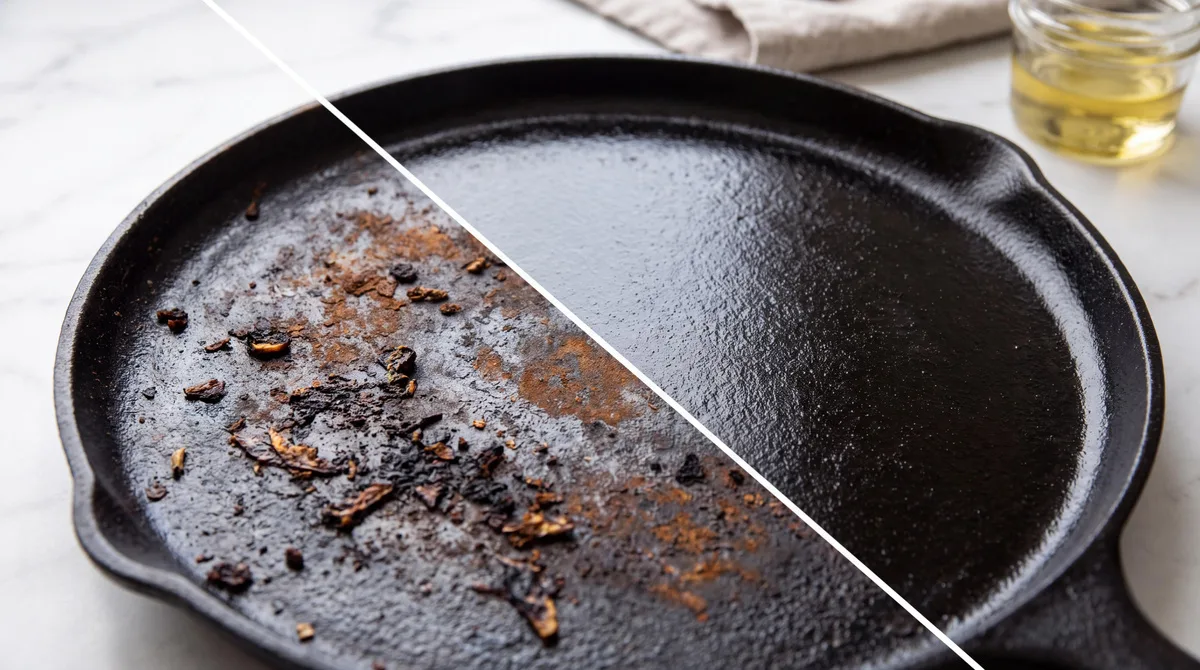
Last autumn, I cleaned my griddle the way I thought I was supposed to: scrape off the food, wipe it down, wash and dry it carefully. But when I uncovered it again months later, the cooking plate was spotted with rust. Turns out, one small final step that I had missed was the most important part of putting it away...
It feels like the responsible thing to do: Before the griddle disappears into the garage or shed for winter, you scrape it, scrub it, and keep going until the cooking surface looks almost brand new. But with bare steel or cast iron, cleaner is not always better. Strip away the protective layer, and you leave the metal more exposed to the damp air that causes rust.
Here is how to put away your ironware for winter without finding an orange surprise in spring...
Why bare metal is more vulnerable
Rust forms when iron or steel is exposed to oxygen and moisture. That is why a griddle can develop rust even when it never gets directly rained on: humid air and condensation can be enough.
Seasoning creates a barrier. Heating oil on a steel griddle turns it into a polymerized layer that helps keep water and oxygen away from the metal. For cast iron, baked-on oil protects the iron underneath from corrosion.
This does not mean leaving last summer's burger grease on the plate. Old food, grease, and debris should come off. The layer you want to preserve is the clean, bonded seasoning beneath it. How can you achieve it? Read on...
The end-of-season routine
Start by scraping away stuck-on food and emptying the grease trap. Clean the cooking surface according to the manufacturer's instructions, then dry it completely. Do not leave it to air-dry in a cold shed; moisture sitting on the metal is exactly what you are trying to avoid.
Next, wipe a very thin layer of neutral cooking oil across the cooking surface and edges. More is not better. Excess oil can become sticky, while griddle manufacturers recommend thin, even coats. The surface should look protected rather than wet or greasy.
If the seasoning is already strong, that protective wipe may be all your griddle needs. If you have scrubbed down to expose metal or the seasoning is patchy, heat the griddle and apply a thin seasoning coat. The heat breaks down the oil and bonds it to the metal, forming a protective polymer layer. Let it smoke off according to your manufacturer's seasoning procedure before cooling the griddle.
Before you oil it, check what it is made from
This advice is mainly for bare or seasoned steel, carbon steel, and uncoated cast iron. It should not automatically be applied to every barbecue plate.
Porcelain-enameled cast iron is different. Enameled griddles and cooking grates do not need seasoning because the enamel already covers the metal. If you are unsure, check your manual before reaching for oil or an abrasive scraper.
Where you store it matters too
Once cool, cover the griddle and move it somewhere sheltered and as dry as possible. Experts recommend indoor sheltered storage in humid or harsh winter conditions and advise tenting a soft cover so water cannot pool on top. It also suggests checking an unused griddle periodically for early signs of rust.
For gas models, close and disconnect the propane cylinder before long-term storage. In the US, propane safety guidance says portable cylinders should remain upright outdoors, away from heat and ignition sources, rather than being stored in a garage, basement, or shed.
Found rust in spring?
A little surface rust does not mean the griddle is ruined. You can scrape away loose rust, working stubborn areas with steel wool, sandpaper, or a griddle stone, cleaning away the debris and then, re-seasoning the surface.
And that brings you back to the same rule: clean metal needs protection. Before the griddle goes away for months, the last thing you want is a completely bare cooking surface.