
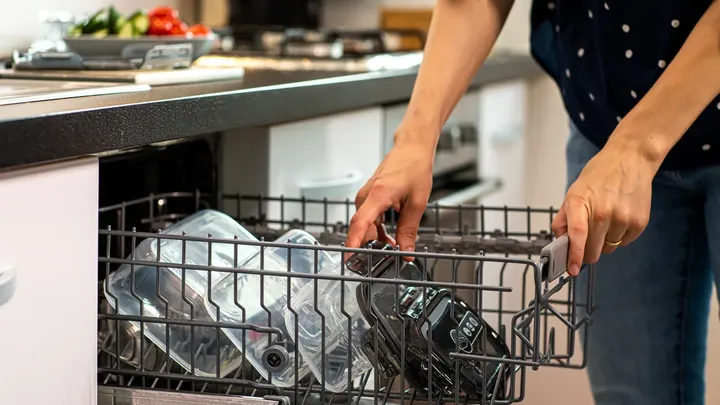
Autumn is soup, stew, and chilli season, which means the freezer soon fills up with plastic food containers. But there's a familiar annoyance afterwards. You take a container out of the dishwasher, only to discover it still feels greasy. And the one that held spaghetti bolognese? It's turned orange.
Two Spanish cleaning creators, Julia and Natalia, have been sharing a trick that takes just a few seconds. All you need is washing-up liquid, some water, and a sheet of kitchen paper. Their version also includes a splash of vinegar.
But first, why does tomato sauce leave that greasy orange stain?
Why tomato sauce leaves plastic containers orange
Removing grease is one thing. Getting rid of orange stains is another.
According to BBC Science Focus, the problem comes from lycopene, the natural red pigment found in tomatoes. Lycopene repels water, as do many plastics. That makes it particularly good at clinging to plastic surfaces, even after washing.
Unfortunately, running the container through a dishwasher doesn't always solve the problem. High temperatures can actually drive the stains deeper into the plastic. That's why a container can feel perfectly clean while still looking orange.
The Spanish trick that takes seconds
Julia and Natalia, who share cleaning advice through their Instagram account @organiza_de_diez, recommend a method that doesn't require scrubbing the container for several minutes.
Here's how to do it:
- Remove any leftover food from the container.
- Add a little lukewarm water and a squirt of washing-up liquid.
- Add a splash of vinegar if desired.
- Put a sheet of kitchen paper inside and close the lid tightly.
- Shake vigorously for a few seconds, then empty the container.
The method works best shortly after using the container, before greasy food residue has dried.
There's one important detail: shaking isn't a replacement for washing. Afterwards, clean the container normally with a clean sponge and washing-up liquid, paying attention to the corners, lid and seals. Rinse thoroughly and allow it to dry.
Why the kitchen paper helps
The real cleaning power comes from the washing-up liquid. It contains substances called surfactants, which help separate grease from surfaces and disperse it through water. This is why washing-up liquid works on greasy frying pans, too.
The kitchen paper provides some additional movement. As you shake the container, it travels across the inside, helping to dislodge and collect loosened residue.
Vinegar isn't essential. Although it may help with certain smells, there's little evidence that adding it makes this particular method better at removing grease.
In fact, an older version of the trick uses just warm water, washing-up liquid and kitchen paper. Instead of shaking, the mixture sits inside for two to five minutes.
What if the orange stain won't disappear?
For existing stains, try making a paste from baking soda, a little washing-up liquid, and water. Spread it over the affected area, leave it for 15 minutes or longer, then wash and rinse.
Avoid aggressive scrubbing. Scratches can make plastic harder to clean.
Some cooking websites also recommend placing stained containers in sunlight. This may help fade discolouration, although results aren't guaranteed, particularly during the weaker autumn sunshine.
How to prevent stains next time
Prevention is usually easier than removing an old stain.
Allow tomato sauces to cool before transferring them to plastic containers, rather than pouring them in while piping hot.
A very thin coating of oil inside the container before adding tomato-based food may give the pigment something else to cling to, although it isn't a guaranteed solution.
Glass containers are worth considering for regular batches of bolognese, chilli, or tomato soup. They're much less likely to retain that familiar orange tint.
The takeaway? Use the shaking trick for grease, but don't expect it to erase every tomato stain. Sometimes choosing a different container is the easiest solution.