
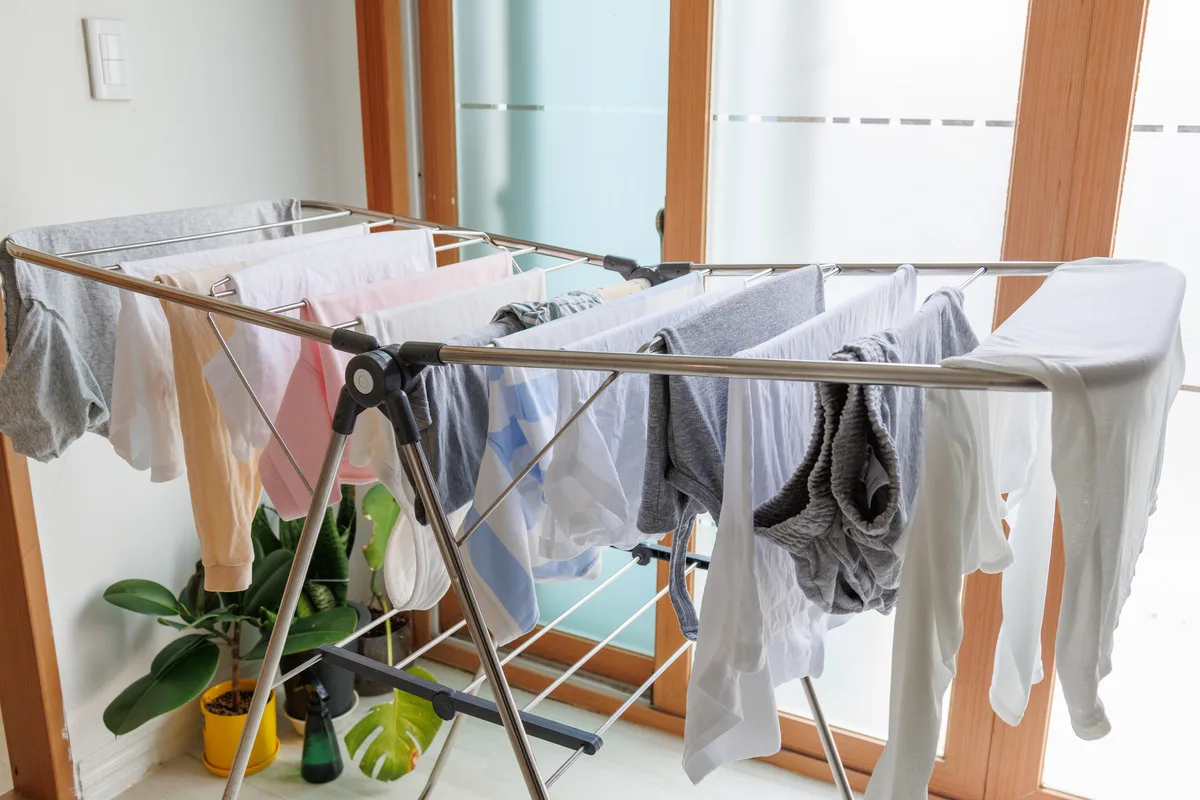
You hang up a load of wet laundry and leave it to dry. By the time you come back, the clothes may be dry, but the water they contained hasn't simply vanished. Much of it has moved into the air around them.
And it's more water than you might think.
One load of wet washing contains almost two liters of water that can be released into the room as it dries, according to Professor David Denning of the University of Manchester. South Kesteven District Council says the average UK household puts around 12 liters of moisture into the air each day from everyday activities. In homes where clothes are dried indoors, that total can rise above 20 liters.
That figure includes moisture from cooking, washing and showers, not just laundry. But it helps explain why indoor drying can sometimes be followed by condensation on windows and other signs of excess moisture.
And there's a reason that extra moisture matters: mold needs moisture to grow. When humid air keeps meeting damp surfaces, it can create the conditions mold needs to take hold.
You don't have to stop drying laundry indoors. The important thing is to give that moisture a way to escape.
Where does all that water actually go?
As wet laundry dries, water leaves the fabric as water vapor and enters the surrounding air.
When humid air meets a colder surface, such as a window or exterior wall, some of that water vapor can condense back into liquid water. The US Environmental Protection Agency says condensation on windows, walls or pipes can be a sign of high indoor humidity.
That's why you can dry a load of laundry indoors and later find droplets on the windows or damp-looking areas around colder parts of the room.
Dry laundry in a well-ventilated room
If you have to dry clothes indoors, Health Canada recommends using a heated, well-ventilated room. South Kesteven District Council similarly recommends a heated, well-ventilated room and suggests a bathroom when it has adequate ventilation.
Keeping the door closed can help prevent moisture from spreading into other parts of the home, while an exhaust fan or open window gives that humid air somewhere to go. The EPA also recommends using bathroom fans, increasing ventilation and using a dehumidifier when needed to reduce indoor humidity.
That musty smell has a reason
Sometimes the problem with drying laundry indoors isn't just how long it takes. It's what the clothes smell like afterward.
Researchers have found that certain bacteria, including Moraxella osloensis, can contribute to the familiar musty smell that develops in laundry that doesn't dry properly.
So if a towel comes off the rack smelling stale even though it was freshly washed, the problem may not be your detergent. Research suggests that the way laundry dries can play a role in that familiar musty odor.
Too much moisture can eventually mean mold
This is where indoor drying can become more than an annoying source of condensation.
Mold grows where there is enough moisture, and high indoor humidity can make it easier for mold to develop on damp surfaces and materials. The EPA recommends keeping indoor relative humidity below 60%, ideally between 30% and 50%.
You don't need to spend the day measuring your home's humidity. But if your windows regularly collect water, your room feels persistently damp, or you start noticing mold in cold corners, it's worth checking what is happening.
A small hygrometer can show you how humid the room actually is. If levels stay high, better ventilation or a dehumidifier can help remove moisture from the air.
And if condensation or mold keeps returning, don't automatically assume laundry is the only source. Leaks and other moisture problems can also contribute.
The next time you hang up a load indoors, remember what is really happening as those clothes dry. You aren't just removing water from the laundry — you're moving it into your home.
The trick is making sure it has somewhere to go.