
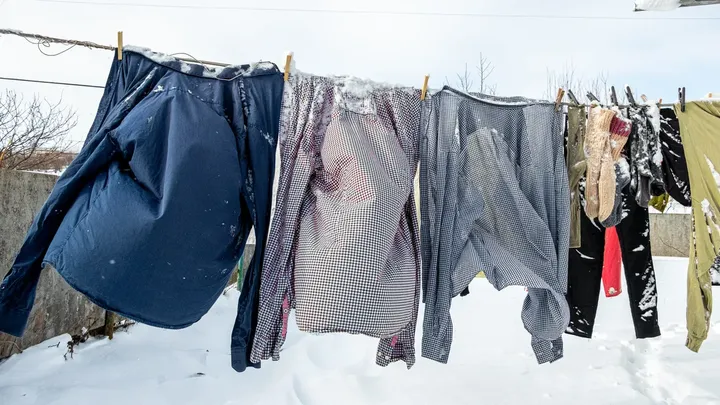
Grandmothers who hung the washing out on a frosty morning weren't being stubborn. Anyone who remembers sheets hanging in a freezing garden may recall how stiff they became, almost like boards.
You would think, freezing clothing would be counterproductive to drying them. Wouldn't they get wet as soon as they thawed?
It sounds strange, but there's real science behind this old household habit. And with tumble dryers adding to electricity bills during winter, it might be worth trying again.
How can frozen laundry possibly dry?
When you hang wet clothes outside in freezing temperatures, the water inside the fabric begins to freeze. But that doesn't mean the drying process stops. Meteorologists have a name for what happens: sublimation.
According to Kirsty McCabe of the Royal Meteorological Society, water molecules can still escape from fabric in cold conditions. In freezing, dry weather, the water trapped in fabric turns to ice and can then gradually escape into the air without melting first.
It happens much more slowly than drying clothes on a warm summer afternoon. However, if the surrounding air is dry enough, moisture can continue leaving the fabric even below freezing.
Swiss clothing company Calida also describes this phenomenon, explaining why frozen washing can gradually become dry.
The important detail is that freezing temperatures alone aren't enough. The weather needs to cooperate.
The winter conditions that make it work
A cold, clear morning with dry air and a gentle breeze offers much better drying conditions than a damp, foggy afternoon.
Wind carries moisture away from the fabric, while winter sunshine provides extra warmth. In fact, the Royal Meteorological Society explains that clothes can sometimes dry faster on a cold, dry day than on a warmer, humid one.
Before hanging out your next load, check the forecast. Look for dry weather, some wind and preferably sunshine. Avoid fog, drizzle and days when the air feels particularly damp.
There's also no need for temperatures to remain below freezing throughout the day. If the ice melts as the weather warms up, ordinary evaporation can take over.
The mistakes that leave winter washing damp
The biggest mistake is assuming that a sunny winter day automatically means good drying weather. Humidity matters just as much.
Dutch laundry specialist Wasdroom recommends hanging washing out early, giving individual items plenty of space and bringing everything inside before evening moisture settles.
An extra spin cycle in the washing machine can also help. Removing more water beforehand means there's less moisture left to evaporate or freeze.
Don't leave frozen laundry hanging outside for days, either. And avoid pulling or folding fabric while it's frozen solid. Let it thaw naturally before handling it.
If your towels feel stiff afterward, don't immediately assume they're still frozen. Air-dried fabrics can become rough because of mineral residues and the lack of movement they would receive in a tumble dryer. A good shake can help soften them.
How much money could you save?
Using a washing line costs nothing in drying electricity, while a tumble dryer can make a noticeable difference to household energy use.
According to Vattenfall, an efficient A+++ heat-pump dryer can use around 0.80 kWh per load.
Using Milieu Centraal's average 2026 electricity price of €0.27 per kWh, that's approximately €0.22 ($ 0.25) every time you use it. Older, less efficient dryers can cost considerably more.
Milieu Centraal estimates that an average tumble dryer uses approximately 180 kWh annually. At the same electricity price, that's roughly €49 ($54.89) a year. Every load dried outside instead of in the machine saves some of that electricity.
Of course, winter line drying isn't always practical. Thick towels and jeans may still need extra drying time indoors, especially during wet weather.
But on the right winter morning, the old-fashioned washing line can do more than you might expect. Grandma's frozen sheets weren't necessarily a sign that she'd made a mistake. Sometimes, she simply understood the weather better than we do.