
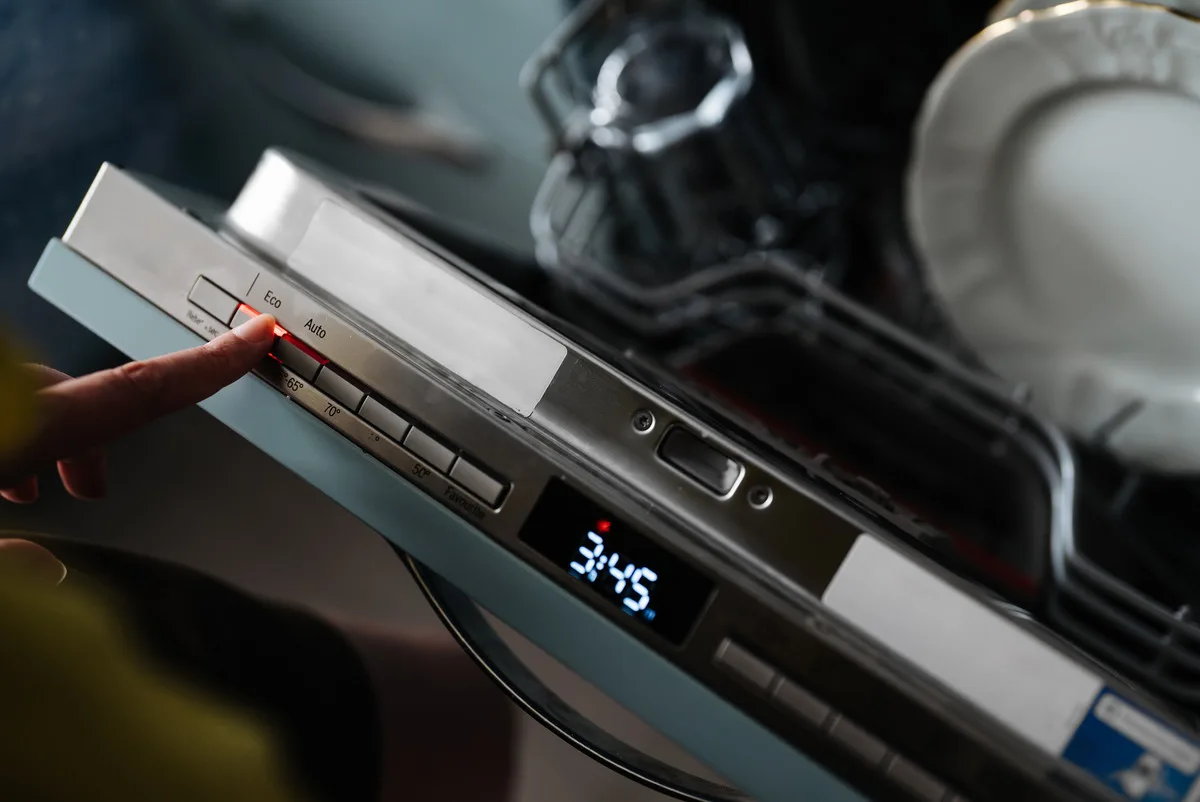
Have you noticed how some newer dishwashers open their door by themselves when the wash is finished?
The dishwasher finishes its cycle, the door opens by a few centimetres and, for a moment, it can look as though something has gone wrong.
It's a small change, but manufacturers have started building this feature into some of their newer machines. And if your older dishwasher still keeps the door firmly shut, you might be wondering whether you can get the same result yourself:
You can! Although there are a couple of things to know first.
Why newer dishwashers open the door
The automatic opening isn't just a gimmick. It's part of the drying process.
Miele calls its version AutoOpen, while Samsung uses names such as Auto Open Door and AutoRelease Dry. On supported models, the door opens towards the end of the cycle rather than remaining completely closed.
Samsung says some of its dishwashers open the door by around 10 centimetres after rinsing and drying, while Miele says its AutoOpen function helps dishes dry better and faster.
So what is that small gap actually doing?
It lets the moisture escape
At the end of a dishwasher cycle, the inside of the machine is warm and humid. With the door completely closed, much of that moisture remains trapped inside the tub.
Opening the door gives the warm, damp air somewhere to escape, allowing more moisture to evaporate from the dishes.
This can be particularly useful for plastic containers and smaller items, which often come out with water droplets still sitting on them.
That's why automatic door opening has become a feature on some newer machines: it changes what happens during the final part of the drying process.
How to copy the idea on an older machine
If your dishwasher doesn't have an automatic opening function, you can often copy the basic idea manually: once the programme has finished, open the door slightly so the warm, damp air can escape.
But check your dishwasher's instructions first. Not every machine is designed to be left partly open, and the safest position can vary between models.
Miele, for example, warns in its guide that escaping steam can damage delicate worktop edges on certain models. The same instructions say that if AutoOpen has been deactivated but the door is opened at the end of a programme, it should be opened fully rather than left partially open.
So there isn't a universal trick where you simply prop every older dishwasher open by a few centimetres. Check what your own machine allows, then open the door in the recommended position after the cycle has finished. The aim is simply to give the moisture somewhere to go instead of trapping it inside.
Be careful with the steam
There's also a good reason not to pull the door open the instant the dishwasher beeps.
The air inside can still be very hot, and opening the door may release a burst of steam. Follow your model's instructions and keep your face and hands away from the opening.
If it's a built-in dishwasher, check what's directly above it too. Bosch, for example, specifies steam-protection film for certain installations to protect the underside of the worktop.
A small feature worth copying
The clever part of the automatic door isn't really the door itself. It's the change in airflow.
By giving warm, humid air a way out at the end of the cycle, the dishwasher can help more of the remaining moisture leave the machine, which may mean fewer wet plastic containers waiting for you when you unload it.
If your older dishwasher regularly leaves dishes damp, check the manual and see whether your model allows the door to be opened after the cycle.
You may not have AutoOpen, but you can still make use of the same simple idea.