
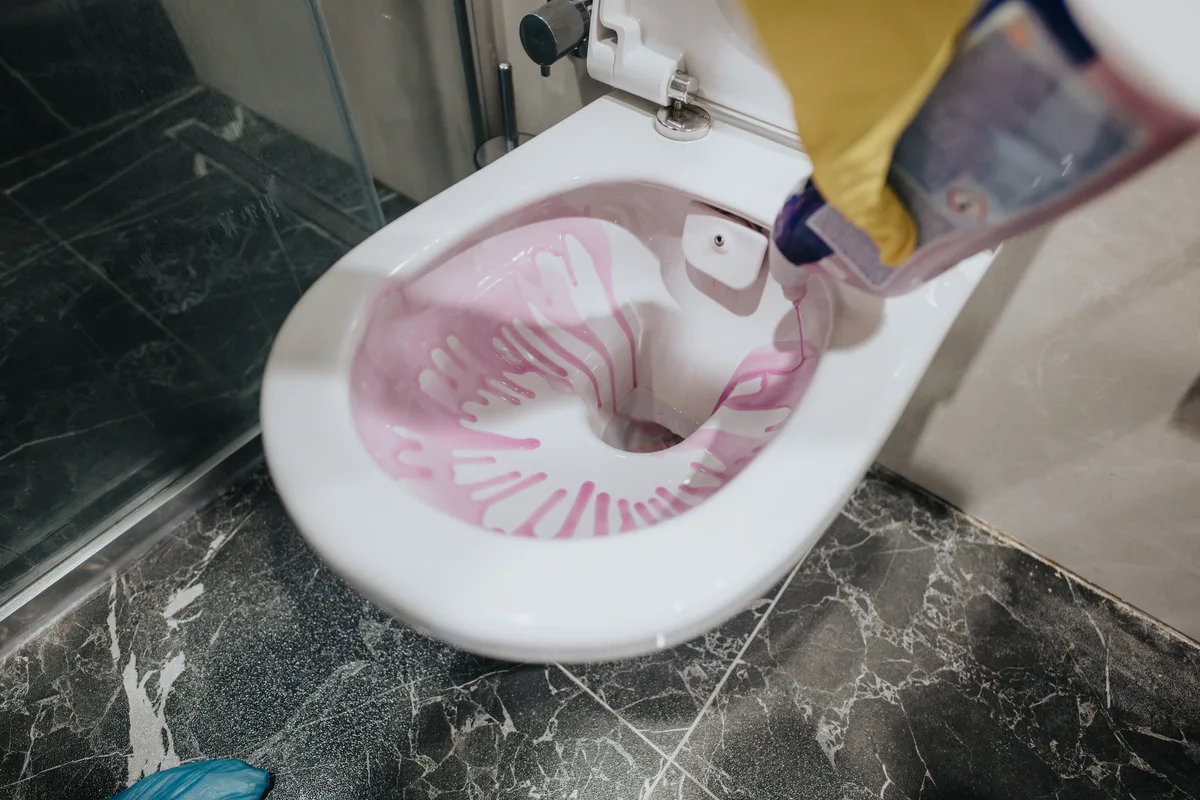
Most of us have a familiar toilet-cleaning routine: squeeze cleaner around the bowl, scrub it with the brush, flush, and perhaps add some bleach afterward to make sure everything is really clean. That last step can be where a perfectly ordinary cleaning job goes wrong.
A Spanish chemical engineer, Diego Fernández, known online as @quimicosparahogar, has been attracting attention with a much simpler routine. His main message is that cleaning and disinfecting are two different jobs, and using more products doesn't necessarily make a toilet cleaner. More importantly, some combinations should never end up in the bowl together.
Clean first, disinfect second
Start with the dirt you can actually see. Dust, hair, and other debris around the toilet should be removed first, while the bowl itself can be cleaned using an appropriate detergent and the toilet brush.
Only after that should you think about disinfecting.
That distinction isn't just social-media advice. The US Centers for Disease Control and Prevention says regular cleaning with soap or detergent removes most germs from household surfaces. Disinfecting usually isn't necessary unless someone in the home is sick or particularly vulnerable to illness. Dirt can also make it harder for disinfectants to do their job properly.
In other words, reaching automatically for bleach every time you clean the toilet may be unnecessary.
If you disinfect, don't wipe it off immediately
There's another mistake that's easy to make: spraying or pouring on a disinfectant and almost immediately wiping it away.
Disinfectants need time to work. Some products may need around two to five minutes, but the important number is the contact time printed on the label. The surface generally needs to remain wet for that period.
The US Environmental Protection Agency (EPA) gives the same advice: antimicrobial products need sufficient contact time to work effectively.
So instead of adding extra product, using the product you already have correctly may matter more.
The combination you really want to avoid
The bigger safety issue is mixing different cleaners.
Figures from the Netherlands' National Poisons Information Centre, or NVIC, show why this deserves attention. In 2025, it recorded 866 telephone consultations involving exposure to chlorine-containing sanitary cleaners, up from 722 in 2024. Among adult exposures involving these products, chlorine-gas inhalation after cleaners had been mixed was a major cause.
Chlorine bleach should never be combined with acidic products. Many toilet cleaners are acidic, and even some toilet blocks contain acidic ingredients. Mixing them can release chlorine gas, which can irritate the eyes and airways and can quickly build up in a small bathroom.
The EPA similarly advises never mixing household cleaning products or adding bleach to other chemicals, and recommends good ventilation while cleaning.
One more reason to clean the surrounding area
Cleaning shouldn't stop at the inside of the bowl. The seat, flush button or handle, outside of the toilet, and nearby surfaces also deserve attention.
Researchers demonstrated why flushing can spread material beyond the bowl. Using green lasers, they visualized tiny droplets from a lidless commercial toilet rising about 4.9 feet, or 1.5 meters, within eight seconds of flushing. The experiment used a clean toilet with only tap water, so it wasn't designed to measure the risk of catching an infection. It simply showed how quickly a toilet plume can travel.
The practical lesson is less dramatic than the laser footage: keep the toilet and nearby surfaces clean, and don't assume everything stays inside the bowl.
A simpler toilet-cleaning routine
Remove visible dirt first, clean the bowl with a suitable cleaner and brush, and flush. Disinfect only when there's a reason to do so, and follow the contact time on the product label.
Most importantly, don't combine cleaners in the hope that two products will work better than one. When it comes to the toilet, using fewer products, in the right order, can be both simpler and safer.