
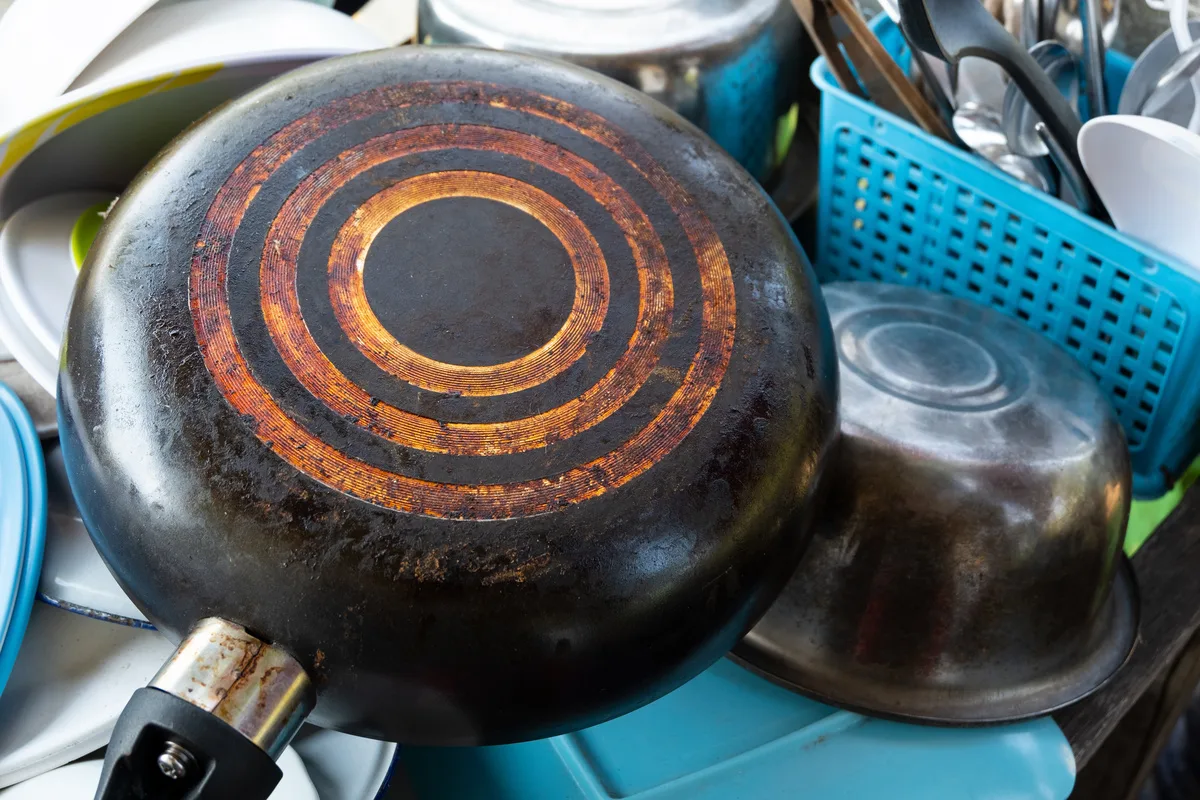
Most people scrub the inside of a frying pan after every use, ignoring the underside. Over months, grease splashes and spills burn onto the bottom until there's a hard brown or black crust, and this is more than just a cosmetic problem.
Fortunately, you probably have something in your kitchen cupboard that can help, but first let's understand why a dirty pan bottom is a bigger problem than you would imagine.
Why a dirty pan bottom matters
The dark coating on pans usually comes from oil, food spills, and other residues that burn onto the metal. A little discoloration isn't necessarily a problem, but a thick, gritty layer is worth removing. Dirt stuck to the bottom of a pan can scratch a glass-ceramic cooktop, and heavy buildup may cause a pan to heat more slowly.
Cooktop manufacturers recommend keeping pan bottoms clean, dry, and smooth. It also advises lifting pans rather than sliding them across the glass.
Start with warm water and dish soap. If the crust won't budge, try one of the following methods:
Baking soda: a good starting point
For an uncoated stainless steel pan, mix three parts baking soda with one part warm water to make a thick paste.
Spread it over the cooled underside and leave it for 10 to 20 minutes. Gently scrub with a soft sponge or nylon brush, then rinse thoroughly and dry.
For stubborn deposits on uncoated stainless steel, you can also try a little salt, baking soda, and dish soap. Place a vinegar-dampened cloth over the mixture and leave it for up to an hour before cleaning. Avoid aggressive scrubbing, particularly on polished surfaces.
Don't expect every black mark to disappear. Baking soda may soften deposits, but it cannot easily dissolve heavily carbonized grease.
Washing soda: for stubborn greasy buildup
Washing soda, also called soda crystals, is stronger than ordinary baking soda. It can be particularly helpful with greasy residue that hasn't completely burned onto the metal.
Dissolve one tablespoon of washing soda in approximately four cups (one liter) of warm water in a larger, suitable container. Stand the dirty pan in the solution so its underside can soak for around an hour.
Scrub gently afterward, rinse thoroughly, and dry. Wear cleaning gloves, and never use washing soda on aluminum cookware.
In some cleaning tests, the washing soda bath loosened deposits more effectively than a baking soda and salt mixture. However, even this stronger cleaner struggled with completely charred residue.
Can ketchup really clean a pan?
It sounds unusual, but ketchup contains mild acids that can help loosen some surface stains, particularly on suitable uncoated metal.
Spread a thin layer over the dirty underside, leave it for about 30 minutes, then wipe with a soft sponge. Wash with dish soap and dry thoroughly.
White vinegar can also help with certain stains. Neither remedy is guaranteed to remove thick, burnt-on grease. Always test an inconspicuous area first.
Be careful with these pan materials
Sometimes, the wrong cleaning method can cause more damage than the original stain.
Cast iron: Use warm water and a sponge. For stubborn residue, try gently rubbing with dry salt. Avoid prolonged soaking, dry thoroughly, and apply a very thin layer of cooking oil.
Nonstick pans: Avoid abrasive powders, scouring pads, and steel wool. Check whether the underside is coated before using any homemade cleaning paste.
Aluminum and enamel: Start with warm water, dish soap, and a soft sponge. Avoid washing soda on aluminum, and follow the manufacturer's care instructions for enamel. Finally, wipe the underside after ordinary washing and keep your cooktop clean.
Finally, preventing new grease from burning on is considerably easier than removing months of buildup. Avoid using oven cleaner as a shortcut unless your cookware manufacturer specifically permits it. Some formulas are corrosive, and harsh cleaning products can damage cookware finishes.