
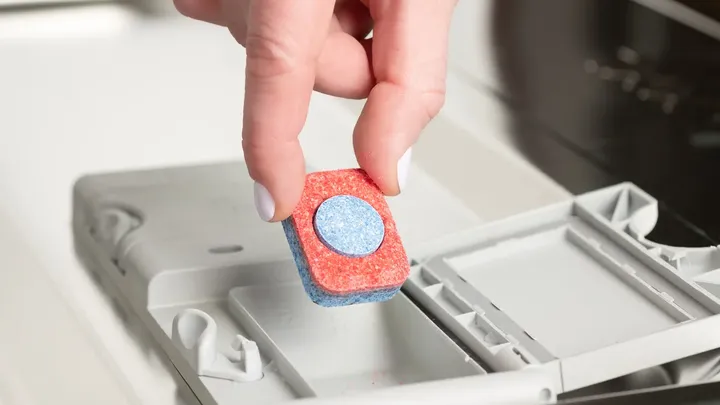
In the supermarket aisle, boxes of dishwasher tablets vary widely in price, and the price on the shelf doesn't always tell you what one wash really costs. A consumer association put a number on it: in its test of 26 all-in-one products, prices ranged from just 6 to 69 cents per tablet or capsule.
But the more interesting finding wasn't the enormous price difference. According to the testers, cheaper dishwasher tablets can perform just as well as more expensive alternatives, and sometimes even better.
That doesn't mean every tablet gives the same results, though. The testers also found noticeable differences in how well products clean, dry and prevent limescale.
What the consumer test discovered
The Dutch consumer organization Consumentenbond compared 26 all-in-one dishwasher products, examining how effectively they cleaned and dried dishes. The researchers also assessed their environmental impact.
The test, last updated on February 12, 2026, found that paying more doesn't necessarily mean getting cleaner dishes.
Some inexpensive products performed very well, showing that supermarket brands and budget alternatives deserve consideration alongside more familiar premium products.
This is particularly useful for households that buy the same dishwasher tablets out of habit. A more expensive box might look like the safer choice, but the price alone says little about cleaning performance.
The results also suggest that comparing products is more worthwhile than simply sticking with a familiar brand.
Why all-in-one tablets don't always deliver the same results
Most all-in-one dishwasher tablets promise everything needed for clean dishes in one convenient product.
They combine cleaning agents, rinse aid, and water-softening ingredients. In theory, that should help remove food residue while leaving glasses and plates clean and shiny.
However, there were considerable differences between products. Some cleaned dishes more effectively, while others performed differently when it came to drying and preventing limescale deposits.
That distinction matters if you regularly open the dishwasher to find wet plastic containers, water spots on glasses or a cloudy film on your dishes.
A tablet might handle everyday food residue perfectly well but be less effective at leaving glasses spotless.
It's therefore worth looking beyond the overall test score. Cleaning, drying and limescale performance can be just as important when choosing which tablets to buy.
How much could cheaper dishwasher tablets save you?
A few cents per tablet might not seem important. But over an entire year, the difference can become surprisingly large.
Imagine your household runs the dishwasher four times a week. That's approximately 208 washes per year.
Cheapest tablets | Most expensive tablets | |
|---|---|---|
Price per tablet | €0.06 ($0.07) | €0.69 ($0.77) |
Washes per week | 4 | 4 |
Washes per year | 208 | 208 |
Annual cost | €12.48 ($13.98) | €143.52 ($160.74) |
Potential annual savings: €131.04 (approximately $146.76).
These are currency conversions of Dutch test prices, not actual US retail prices. The example compares the lowest and highest prices in the test, not two products with identical performance.
Even switching between two less extreme price points can make a difference, especially if you run the dishwasher almost daily.
The easiest comparison is the cost per wash. Divide the pack price by the number of tablets inside.
A large box isn't automatically the cheapest option, particularly when smaller packs are discounted.
What about dishwasher tablets in other countries?
The Dutch prices won't necessarily match what shoppers pay elsewhere. However, independent testers in other countries also examine whether expensive products justify their price.
In the UK, consumer organization Which? tested 15 dishwasher detergents in 2026, including supermarket brands and premium products.
Its published prices ranged from 10p per wash for one Lidl product to 40p for a dishwasher sheet. The organization checks cleaning performance, cloudy glasses, water marks and sustainability. Its full rankings require membership.
For American shoppers, the same principle applies: compare the price per load in dollars and cents, using independent test results for products sold locally rather than assuming Dutch results apply to US versions.
What to check before buying your next box
Before stocking up, check how many washes you're actually getting for the price. Then look at independent test results, particularly if you struggle with cloudy glasses or dishes that stay wet.
It's also worth checking whether a product carries a recognized environmental label. Consumentenbond found that some dishwasher products with eco-labels now perform well at cleaning, too.
The main lesson is simple: a higher price doesn't guarantee a better wash. A cheaper tablet that performs well in independent testing could be an easy way to reduce your household expenses without changing your daily routine.