
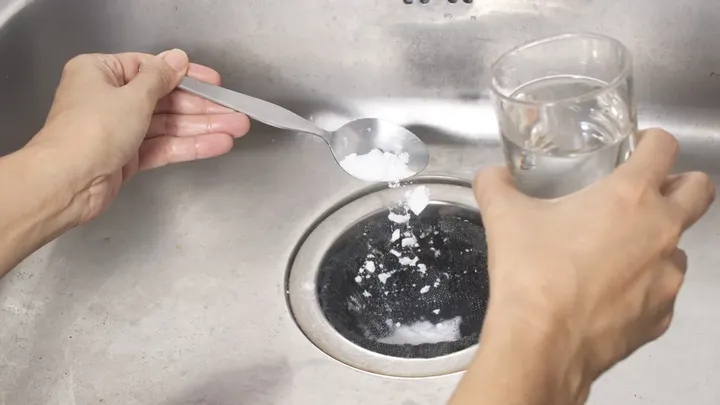
A slow-draining sink can be frustrating, especially when water starts pooling around the plughole. Before reaching for a plumber's number, many people turn to a familiar home remedy: baking soda and vinegar.
Pour the two ingredients down the drain, watch them fizz, then rinse everything away with hot water. It seems simple enough, and the bubbling makes it look as though the blockage is being broken down.
But plumbers say this popular trick isn't always as effective as it looks. So, when does it help, and what should you try instead when your sink refuses to drain properly?
Why baking soda and vinegar don't do much
The problem is that baking soda and vinegar mainly react with each other rather than the blockage. Baking soda is a base, while vinegar is an acid. When mixed, they produce carbon dioxide, which creates the familiar fizz.
According to Dutch drain specialists Regioriool, the reaction leaves little behind that can tackle a stubborn clog. The gas escapes through the pipe instead of building up enough force to push the blockage away.
Plumbers at Benjamin Franklin Plumbing make a similar point: the mixture may help with light residue and unpleasant smells, but it won't dissolve a clump of hair or remove a solid obstruction.
When the home remedy can help
That doesn't mean the mixture is completely pointless. If your drain still empties normally but smells unpleasant, it may help with light maintenance.
Regioriool suggests adding a tablespoon of soda to a dry drain, pouring in a splash of vinegar and leaving it for around 30 minutes before rinsing with hot water. However, this is a cleaning tip for minor residue, not a reliable fix for a serious blockage.
If water is already pooling in your sink, it's better to try another approach.
Why hot water can help
Hot water can loosen greasy residue, which is why it often appears in drain-cleaning recipes. A little washing-up liquid may help carry the loosened grease away.
Be careful with boiling water, though. Repeatedly pouring it into a drain can damage some plastic pipes or their joints. If you're unsure what your plumbing can tolerate, use hot tap water instead. And remember, hot water won't remove a clump of hair or a solid object.
What plumbers recommend trying instead
If your sink is draining slowly, work through these steps:
- Try hot water and washing-up liquid. This may help if grease is contributing to the problem.
- Use a plunger. Leave some water in the sink to help create suction, and cover the overflow opening with a damp cloth.
- Clean the trap. Place a bucket underneath before carefully removing the U-bend beneath the sink. Clear out any debris and refit it securely.
- Use a drain spring. If the blockage is deeper, a drain auger may reach it. Follow the tool's instructions to avoid damaging the pipe.
- Call a plumber. If the blockage won't clear, keeps returning or affects several drains, it's time to get professional help.
To prevent future clogs, use a hair catcher in the shower and clean it regularly. In the kitchen, avoid pouring cooking grease down the sink.
Baking soda and vinegar may help freshen a drain, but the fizz isn't proof that a blockage is clearing. For a stubborn clog, a plunger or other mechanical method is usually a better place to start.